Ruleet e Jaŋde Matematik
Taarorde ruleet ina newna natte porobabilite e hakkil. Ɗoo ko no kuutorirtee nde e nder jaŋde tawa ina wattaa yimɓe e fijo kaalis.
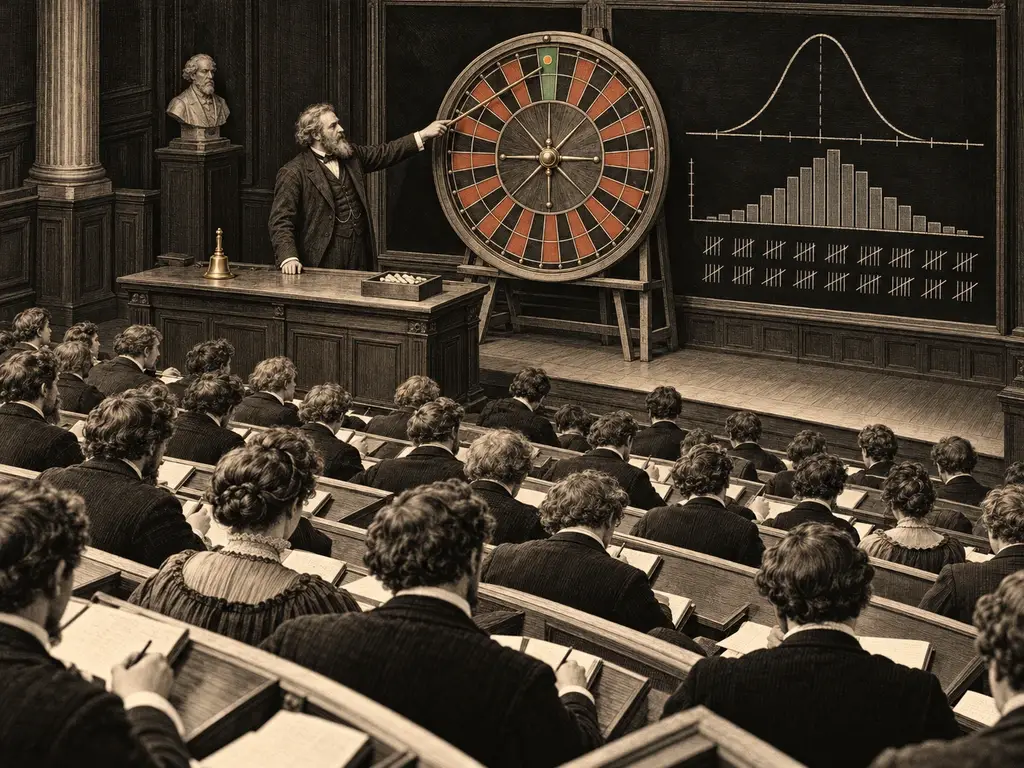
A model with 37 equally likely, independent outcomes connects counting, expectation, variancematematikWariyaasPeeta no njeñtuɗi saŋkitiri e njaru fodaandu. Ina toowi ngam limoore wootere, ina lesɗi ngam pariiji njoɓdi fotndi.Tar fof →, repeated events and hypothesis testing. State the assumptions, use simulated outcomes without real stakes, and distinguish a mathematical result from a claim about how students learn.
Ko waɗi ruleet
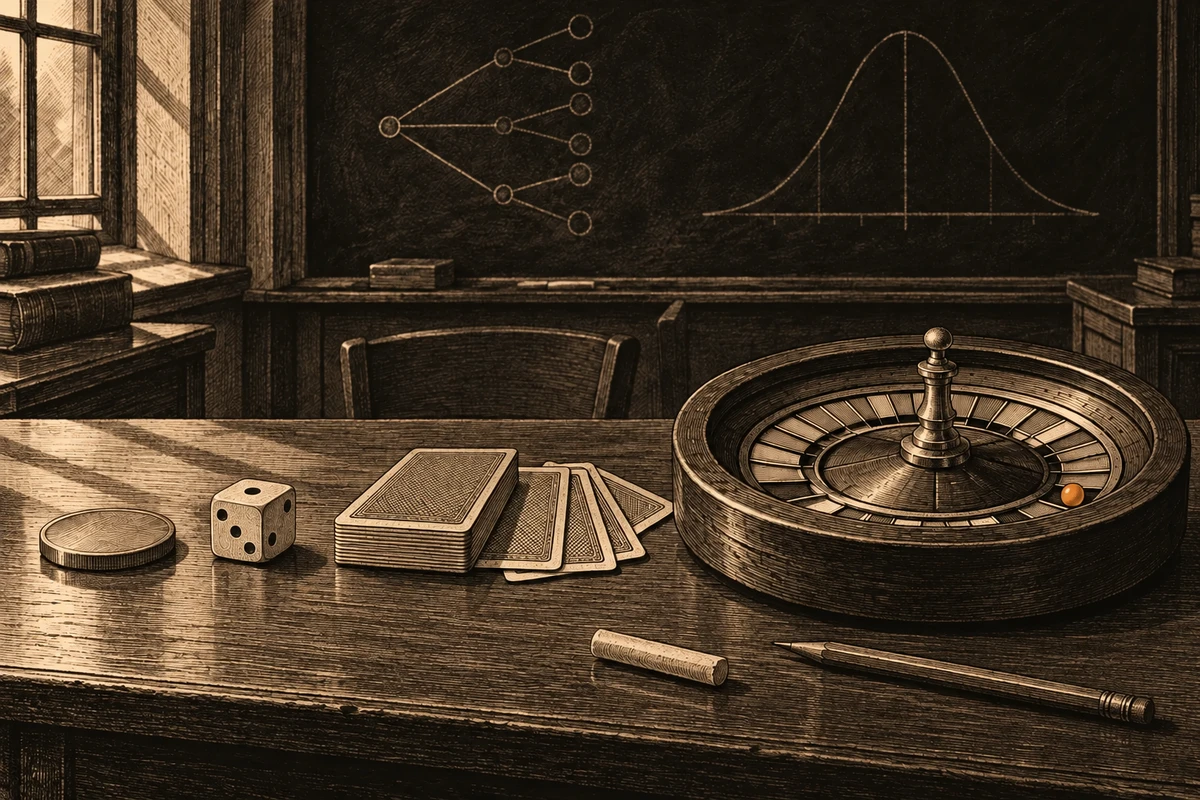
A fair single-zerotaarordeSeeroSuudu haako wootere nde hay pari njoɓdi fotndi, sappo e ɗiɗi walla kolon kuuɓataa; ko ɗum woni iwdi ɓural kasino. Ina noddee kadi: seero gooto, 0.Tar fof → roulette model offers 37 outcomes and a convenient payoutkaalisNjoɓdiKo pari dañndi ruttata, wiyaa “X e 1” ɓeydaa e pari ruttaaɗo.Tar fof → formula. It is one example among many: coins, dice and cards can also illustrate probabilitymatematikPorobabiliteSahaa njeñtudi, immorde 0 haa 1 walla 0% haa 100%. Limoore wootere: 1/37 = 2,70%.Tar fof →, repeated outcomes and statistical tests. Drawing cards with replacement gives a different model from drawing without replacement.
Uniformity and independence are assumptions to examine, not properties guaranteed by a wheel’s appearance. For a standard bet covering n numbers and paying 36/n − 1 unitskaalisInitePari fuɗɗoode mo sistem walla fijoowo gollirta. Jokkondirɗe pari ina cifee e initeeji ngam ɗi kuutoroo e kala taabal.Tar fof → of profit on a win, the expected net result per unit staked is −1/37. Special payouts and zero rules change that result.
Jokkondiral jaŋde
Ɗee misalli ina miijoo njeñtuɗi ceertuɗi, potɗi e 0–36, so wiyaaka ko woori ɗum.
Janngingol tawa wonaa fijo kaalis janngintee
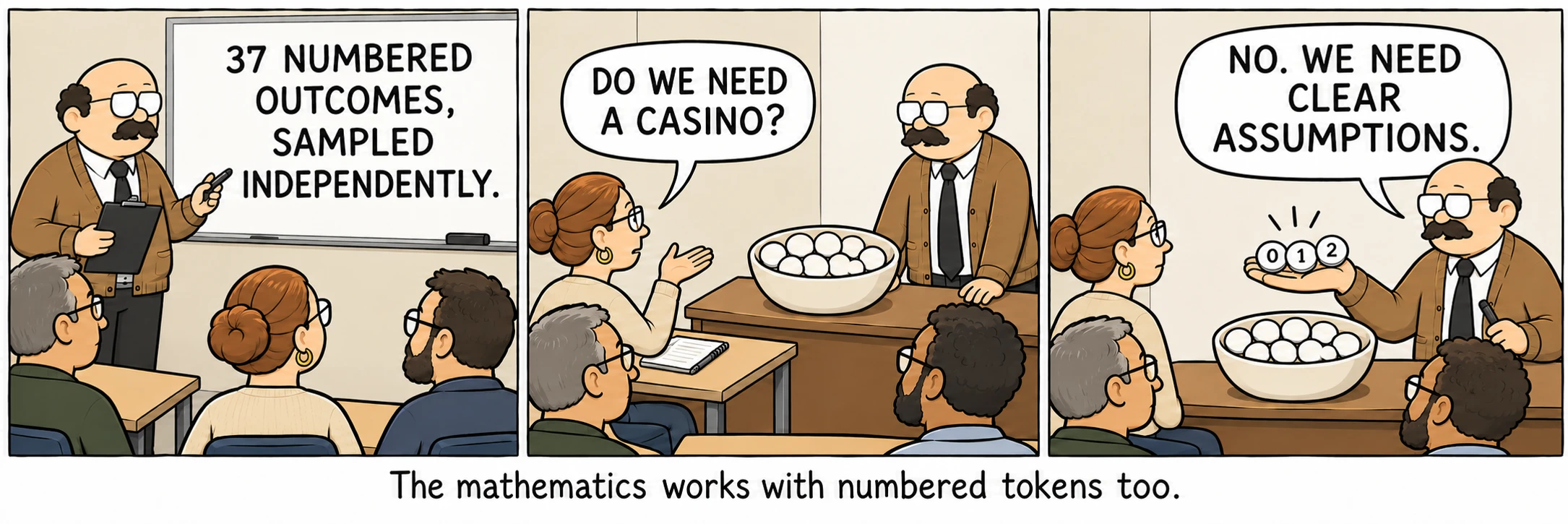
Keep real money out of the activity. A spreadsheet or a set of numbered tokens can reproduce the mathematics without a casino setting. Choose the framing for the learners and the institution; a negative-expectation explanation alone does not establish that a gambling-themed activity is suitable for every class.
Ask learners to state the sample space, payout and independence assumptions before calculating. A simulation illustrates variability; one losing session is not a proof that a system fails, and one winning session is not evidence that it works.
Golle gollooje
Compare predictions with calculations, without presenting invented guesses as classroom data. For the birthday problemmatematikCaɗeele ñalnde jibinanndeYimɓe hoto foti ngam ɗiɗo e maɓɓe ina mbaawi wondude ñalnde jibinannde, walla taarle hoto foti ngam limoore ruttaade. E taarorde cuuɗi 37, taarle 8 ina keddii ngam porobabilite ɓurnde feccere.Tar fof →, record the first repeat in several simulated sequences and compare the distribution with the exact model. Separate the probability of a repeat by a given draw from the expected waiting time.
For a multiple-comparisons exercise, generate many independent fair histories and record the largest pocketkuutorɗeSuuduGootel e cuuɗi 37 limoraaɗi e rotoor. Ina noddee kadi: wenndu, kopp.Tar fof → count in each. Compare those maxima with the count for one pocket selected in advance. Shuffling a history preserves all pocket counts, so it cannot test whether a high count is unusual under a uniform model.
For staking systems, record the rules, bankrollkaalisKaalis pariKaalis fof ko seŋaa ngam fijde. Toppitagol kaalis pari ko ñaawde ko foti waɗeede e kala pari e kala jonnde.Tar fof →, table limittaabalKeerol taabalPari ɓurɗo famɗude e ɓurɗo mawnude jaɓaaɗo. Keerol dow ngol ko ngol dartinta jokkondirɗe pari ɓeydooje ɗiɗi laabi.Tar fof →, stopping condition and total amount wagered. Compare many runs with the appropriate mathematical expectation; do not assume every progressiondabareJokkondiral pariKala sariya waylowo pari e njeñtuɗi ɓennuɗi. Jokkondiral caggal majjere ina ɓeyda pari caggal majjere, caggal dañal ina ɓeyda ɗum caggal dañal.Tar fof → has a fixed session win rate.
Ko waɗi ina heddoo e hakkil
A worked example can connect an equation to observable outcomes. Whether this setting improves learning or retention would require educational evidence; anecdotes about memorable casino stories do not establish that. Ask learners to explain the assumptions and transfer the method to a neutral example, such as numbered tokens drawn with replacement.
Naamne
No. Follow the institution’s requirements and the learners’ needs. Neutral numbered outcomes can teach the same mathematics without a gambling setting.
Define the sample space and independence assumptions, calculate a simple expectation, then compare repeated simulated results. The House EdgematematikƁural kasinoGeɗal kala pari ngal kasino jogiiyata e hakkundeere: 2,70% e ruleet Orop.Tar fof → and Variance pages provide worked examples.
Alaa e mum kaalis goonga, alaa konte, alaa jokkorde faade e kasinooji.
Ƴeewndo weltinoowo
Njeñtuɗi capanɗe tati e jeeɗiɗi, ɓural gootal, teemedde ɗiɗi juumɗe ɗe jaŋngetee.
Iwdi
- Feller, W. An Introduction to Probability Theory and Its Applications, Vol. 1.
- Ethier, S. N. The Doctrine of Chances: Probabilistic Aspects of Gambling.