Majjere Fodaande
House edgematematikƁural kasinoGeɗal kala pari ngal kasino jogiiyata e hakkundeere: 2,70% e ruleet Orop.Tar fof → times the amount wagered: how to calculate expected loss.
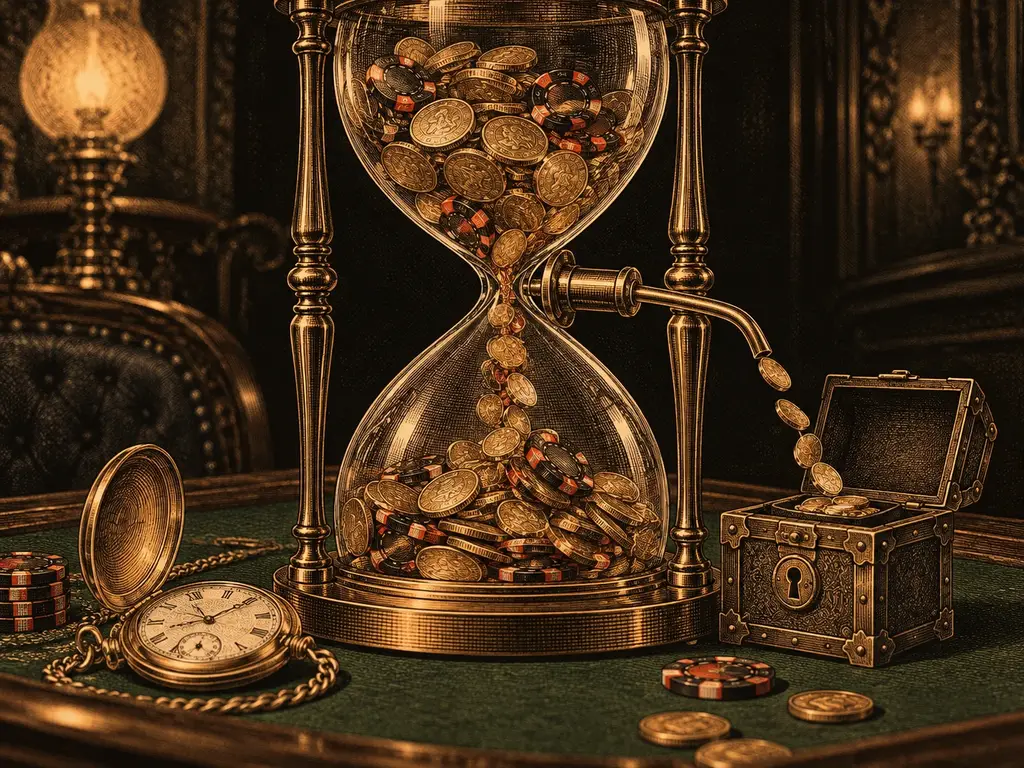
Majjere fodaande = kaalis pariyaaɗo fof × 1/37. Pari $10, taarle 100: $1 000 pariyaaɗo, $27 majjere fodaande. Jokkondire pari ina ɓura waɗde pari, ɗuum waɗi ɗe ina ɓura majjinde.
Kaalis pariyaaɗo fof, wonaa kaalis pari
Expected lossmatematikMajjere fodaandeNjaru fodaandu fiyaandu e kaalis pariyaaɗo fof; ko hakkundeere kaalis majjataako nder jonnde walla nder sahaa.Tar fof → depends on how much passes across the table, not on how much you brought. Completing $2,000 of standard single-zerotaarordeSeeroSuudu haako wootere nde hay pari njoɓdi fotndi, sappo e ɗiɗi walla kolon kuuɓataa; ko ɗum woni iwdi ɓural kasino. Ina noddee kadi: seero gooto, 0.Tar fof → bets gives an expected loss of $54.05. A $100 starting bankrollkaalisKaalis pariKaalis fof ko seŋaa ngam fijde. Toppitagol kaalis pari ko ñaawde ko foti waɗeede e kala pari e kala jonnde.Tar fof → might or might not last long enough to complete that turnoverkaalisKaalis pariyaaɗo fofKawrital kaalis pariyaaɗo nder jonnde walla sahaa, limtaa kadi kaalis dañaaɗo pariyaaɗo kadi. Ina noddee kadi: handle, action.Tar fof →. A single $10,000 bet on redpariBoɗeerePari njoɓdi fotndi e limooje 18 boɗeeje. E Farayse: rouge.Tar fof → has an expected loss of $270.27. These are averages, not deductions or limits on the actual loss.
Formil ngol
For a fixed schedule of standard single-zero bets, E[loss] = total stakes / 37. With stakes or stopping times that depend on earlier results, expected loss is expected turnover / 37, provided expected turnover is finite. The table shows fixed-stake examples, assuming all 100 spins are completed. ProgressiondabareJokkondiral pariKala sariya waylowo pari e njeñtuɗi ɓennuɗi. Jokkondiral caggal majjere ina ɓeyda pari caggal majjere, caggal dañal ina ɓeyda ɗum caggal dañal.Tar fof → averages require a specified bankroll, limit, stopping rule and simulation or calculation.
Yaawre
Taabalji live ina ngaɗa taarle 40–60 e waktu, saalji kasino 30–50, taabalji yaawɗi 90 walla ko ɓuri, taabalji RNG no yaawiri ko ñoɓɗaa. E pari gootal, yaawre ko doole ɓurɗe mawnude e majjere fodaande e kala waktu: yahde e taabal saal leeltuɗo haa taabal RNG fijaaɗo e taarle 200 e waktu ina fiɓa coggu jemma oo laabi nay tawa kot waylitaaki.
E hitaande
At 50 spins per hour, two hours per week and $10 per spin for 52 weeks, total turnover is $52,000. Expected loss is about $1,405 on standard single-zero bets, $703 on la partagesariyaLa partageSariya Farayse: so seero yalti, feccere pari njoɓdi fotndi ina ruttee. Ina feccita ɓural kasino e pariiji ɗii haa 1,35%.Tar fof → even-money betspariPari njoɓdi fotndiBoɗeere/ɓaleere, peccotaake/peccotoonde, mawɗe/tokooseeje. Limooje 18, ina yoɓa 1:1.Tar fof →, or $2,737 on standard double-zero bets other than the five-number bet. These figures assume every scheduled bet is made. Fewer bets, smaller stakes or a lower edge reduce expected loss; actual results remain uncertain.
Fijo ɓurngo kala banke coggude
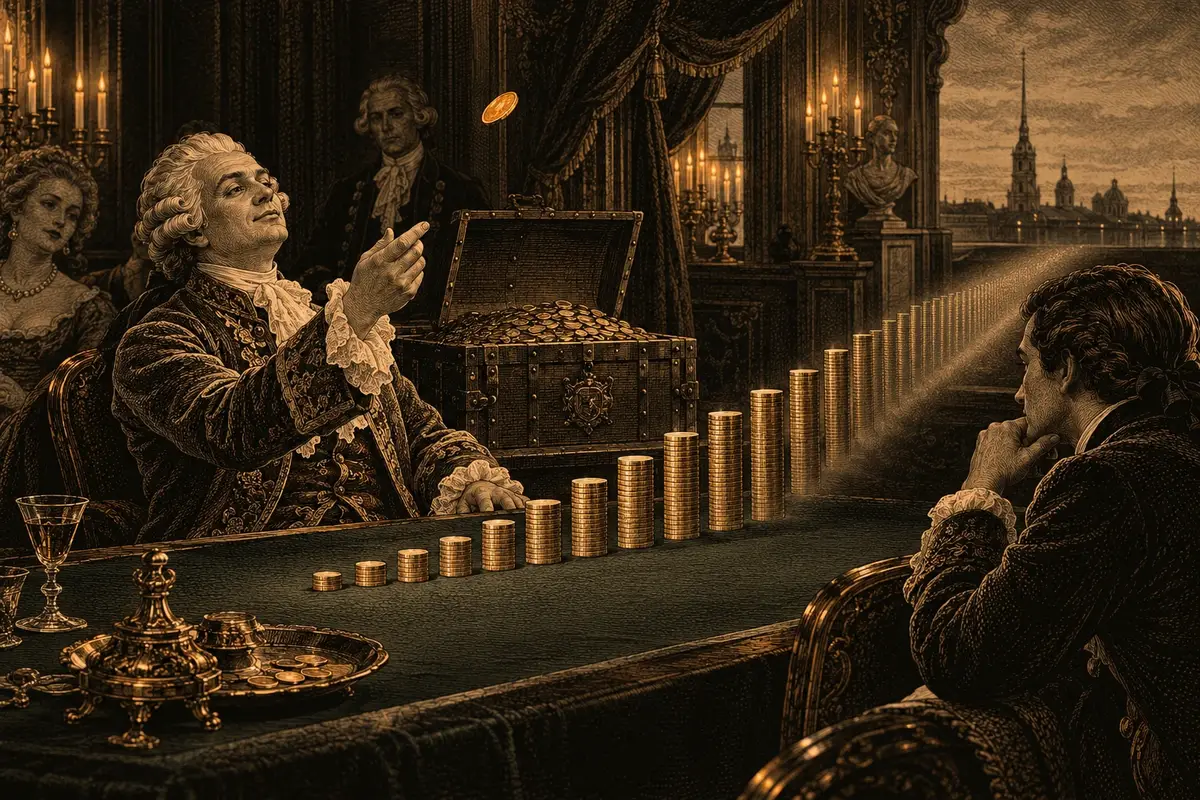
The St. Petersburg game, posed by Nicolaus Bernoulli in 1713, tosses a coin until it lands heads and pays $2 if that takes one toss, $4 if two, $8 if three, doubling each time. Every possible length adds $1 to the expected valuematematikNjaru fodaanduNjeñtudi hakkundeere e kala pari e juuta. −1/37 pari ngam kala pari Orop laawol.Tar fof →, so on paper the game is worth an infinite amount. No bank can pay infinite prizes, and once the prizes are capped at what the bank holds, the value collapses: with a bank of $1 million the game is worth about $21, with $1 billion about $31. The comparison with MartingaledabareMartingaleJokkondiral pari ɓeydoowo pari ɗiɗi laabi caggal kala majjere. Ƴeew hello Dabareeji ngam anndude ko ngal waɗata e ko ngal waɗataa.Tar fof → is the importance of limits: a theoretical doubling sequence can require stakes beyond any finite bankroll or table limittaabalKeerol taabalPari ɓurɗo famɗude e ɓurɗo mawnude jaɓaaɗo. Keerol dow ngol ko ngol dartinta jokkondirɗe pari ɓeydooje ɗiɗi laabi.Tar fof →. That does not make the two games identical. A failed progression need not lose the entire bankroll, and a short session can finish ahead.
Majjere fodaande wonaa njeñtudi
A single session can differ greatly from its expected loss. For 100 independent standard single-zero even-money bets at $10 each, the net result has a standard deviationmatematikSeerndu ndenndaanduRaasin karee wariyaas; ko woɗɗeende aadanteende njeñtudi e njaru fodaandu.Tar fof → of about $99.96 and an expected value of −$27.03. A winning session is possible. Expected loss describes the average across repeated sessions under those assumptions; it is neither a fee nor a limit on what one session can lose.
Formil
Naamne
No fixed percentage is deducted from your buy-intaabalSoodgol jetoŋjiWaylude kaalis kaayit e jetoŋji e taabal. Ina waɗee hakkunde taarle, kaalis oo ina waɗee e tapi, wonaa rokkeede kurupiye e jungo.Tar fof →. For standard bets on a fair single-zero wheel, expected loss is about 2.70% of the amount wagered. Actual results vary. Re-betting winnings adds to the amount wagered.
With the same rules and number of bets, a smaller fixed stake lowers expected loss. The probabilitymatematikPorobabiliteSahaa njeñtudi, immorde 0 haa 1 walla 0% haa 100%. Limoore wootere: 1/37 = 2,70%.Tar fof → of reaching a profit target is a different question and also depends on bankroll, stake and stopping rules.
Kasinooji ina kiisa majjere fodaande maa e pari hakkundeeri e waktu fijaaɗo ina ruttina feccere mayre hono dokke. Ko feccere coggu ngun ɓe ruttinta, wonaa ɓural ɓe ndokkata ma.
Ƴeewndo weltinoowo
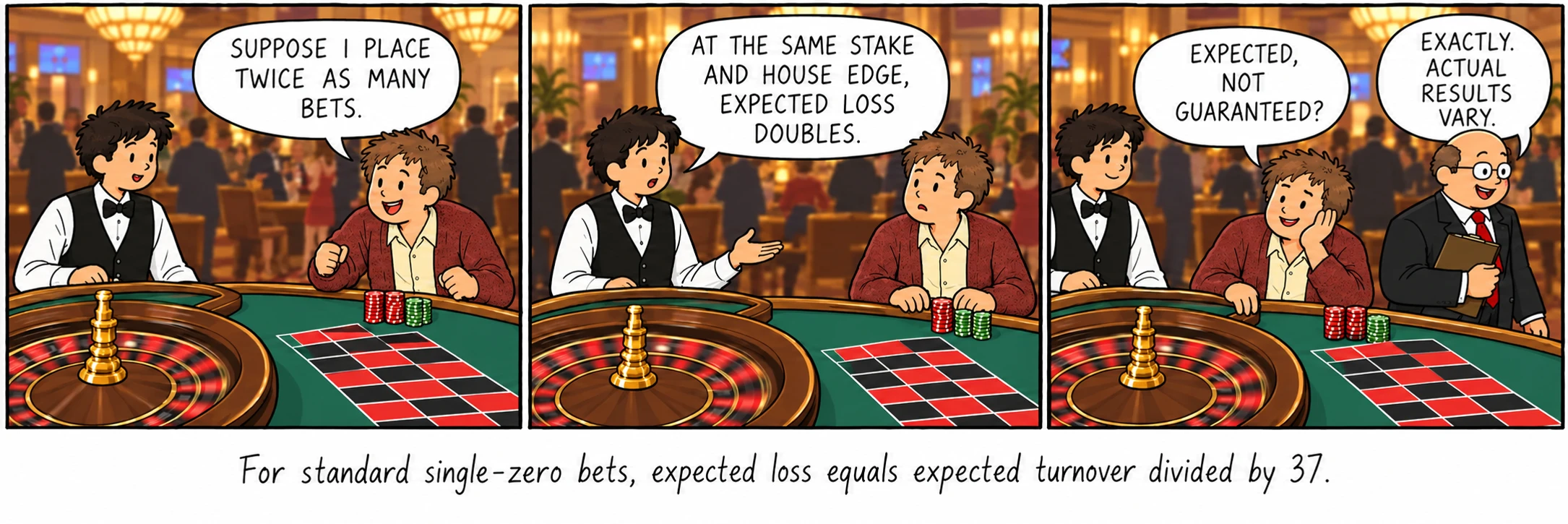
Kaalis pariyaaɗo fof × 1/37. Montoor ngoo ina e formil ngol.
Iwdi
- Ethier, S. N. The Doctrine of Chances: Probabilistic Aspects of Gambling.
- Epstein, R. A. The Theory of Gambling and Statistical Logic, 2nd ed.
- Taylor, D. G. Games, Gambling, and Probability: An Introduction to Mathematics, 2nd ed.