Fiisik Taarorde Ruleet
Fiisik taarorde ruleet ina rutta e rotoor, bal dow laawol jippungol, deflektooruuji jeetati e frotomaa keewɗo.
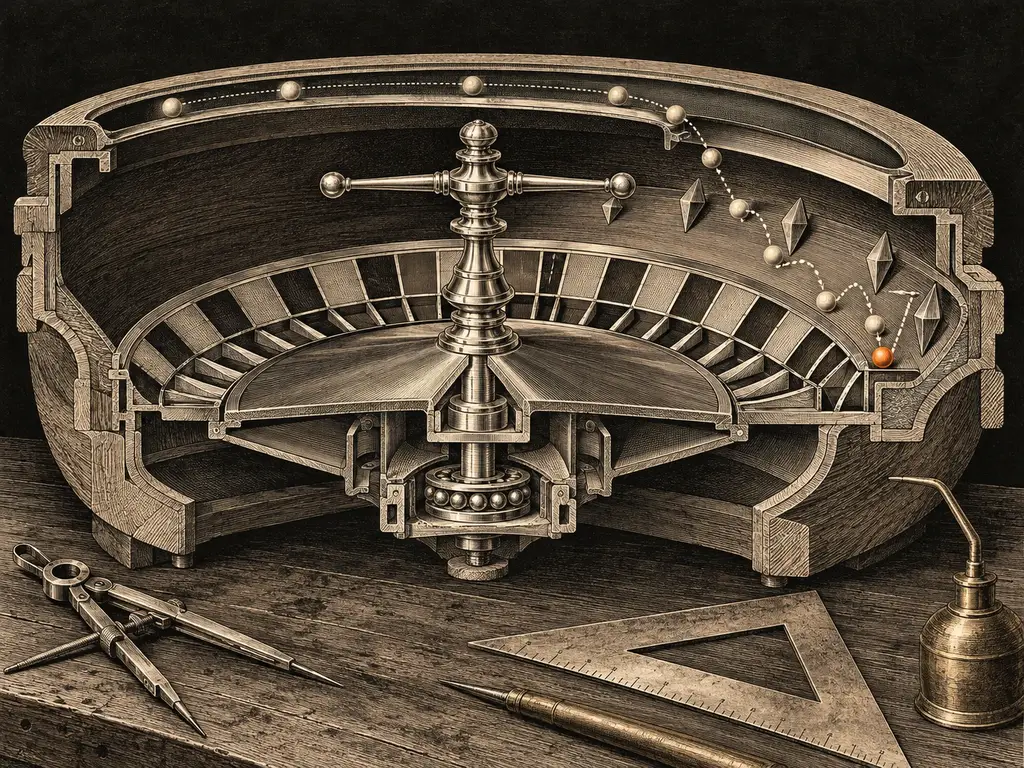
The ball slows on the track, moves inward and collides with deflectorskuutorɗeDeflektoorGooto e haɗooji njamndi woodɗi e tellorde ɗi saŋkitinta bal ina jippoo. Ina noddee kadi: kanuu, diyamaa, pinngu.Tar fof → and pocket dividers. Those stages follow mechanics, but useful prediction requires measurements and a model that works under the actual conditions.
Daawe tati
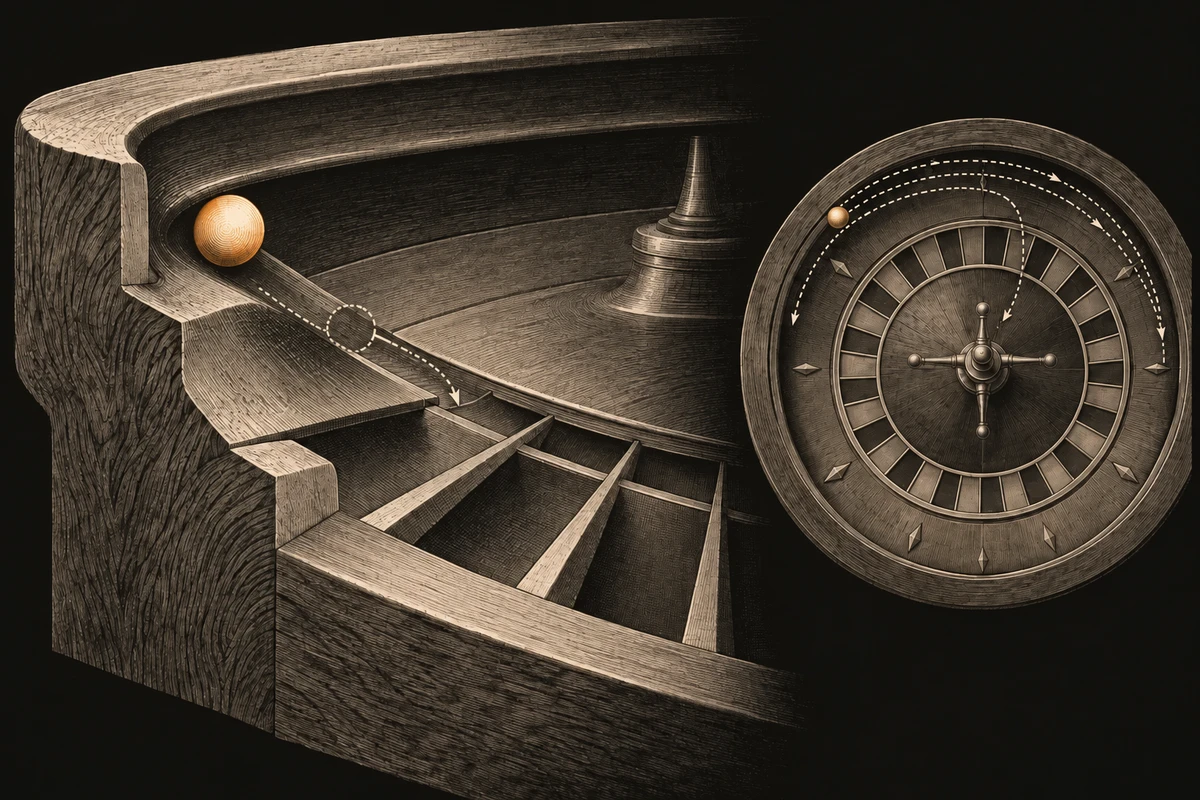
First the ballkuutorɗeBalBal tokoosal werlaangal e laawol ngol e laawol rotoor ngol. Balli jamaanu hannde ko ivorine walla Teflon, 18–21 mm.Tar fof → travels around the track. It then leaves the rim and moves toward the rotorkuutorɗeRotoorGeɗal taarorde taarotooɗo, roondiiɗo cuuɗi ɗii.Tar fof →. Finally, collisions and rebounds determine where it settles. Splitting a spin into these stages helps explain it, but does not make the last stage physically random or wholly unpredictable.
Bal ngal ina yaha e laawol yaasungol.
Semmbe ina ustoo sabu ko haɗata dillere ndee.
Bal ngal ina naata e nder, ina woɗɗitoo e keerol.
Deflektooruuji e ceerle ina mbayla dillere mum.
Bal ngal ina dara e nder suudu.
Laawol ngol
A circular path requires inward acceleration v²/r. The contact forces depend on the track geometry and the ball’s motion. In an ideal level conical-track model, the departure threshold is v² = rg tan(α), with slope angle α measured from horizontal. Real geometry, tilt and losses can complicate that approximation.
Rotoor
If a 37-pocketkuutorɗeSuuduGootel e cuuɗi 37 limoraaɗi e rotoor. Ina noddee kadi: wenndu, kopp.Tar fof → rotor turns at 0.4 revolutions per second, 14.8 pockets pass a fixed point each second. A 0.1-second timing error then corresponds to 1.48 pocket widths of rotor motion. This is an illustrative conversion, not a measured accuracy claim.
Deflektooruuji e ceerle
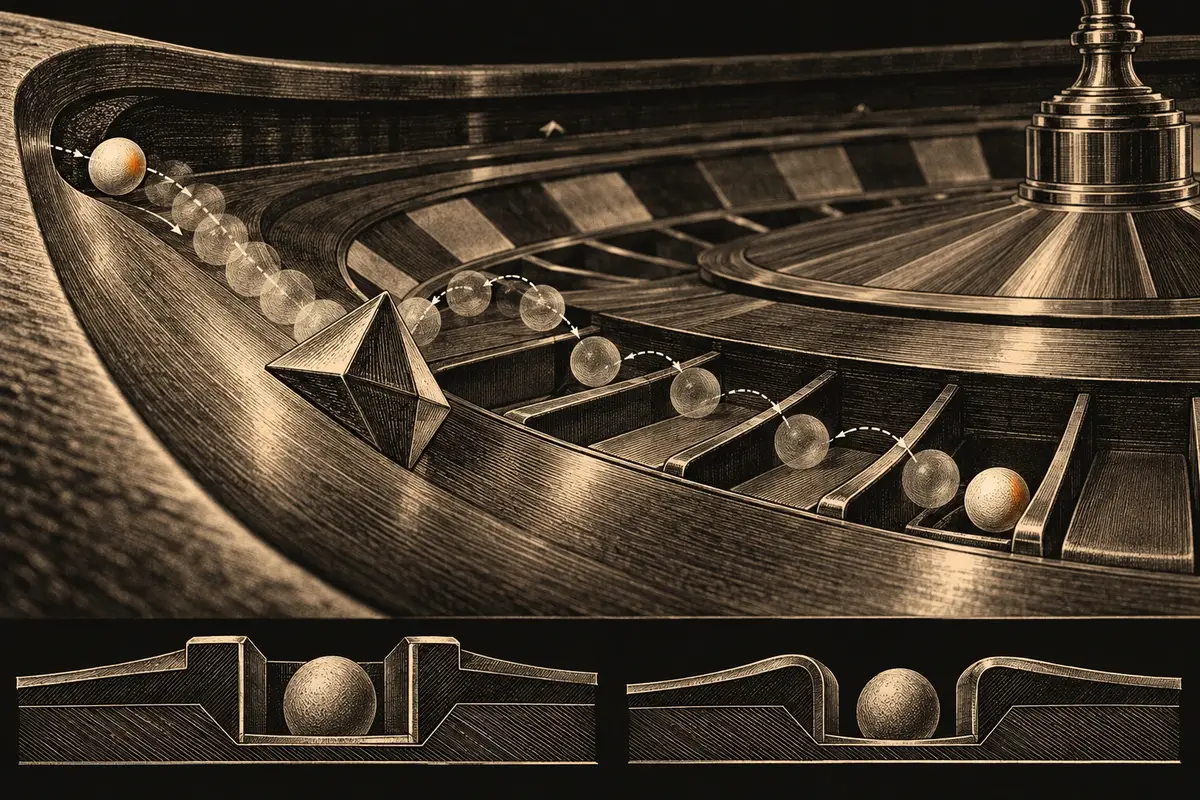
Collisions can amplify small differences in position, velocity or contact angle. The resulting scatter should be measured for the equipment and conditions of interest. Neither a universal 10-to-15-pocket spread nor a symmetric distribution can be assumed without data.
Ko waɗi fooɗde ruleet e fiisik ina waylita kot seeɗa tan
The size of any predictive advantage is not fixed. Small and Tse’s 2012 experiment reports 13 successful target-half predictions in 22 trials, corresponding to an 18% sample return under their stated calculation. That small experiment is not a universal casino edge or a guarantee that a player can reproduce it.
Toon yahataa caggal ɗuum
Fiisik taarorde ruleet ina feccaa e hello fiisik bal, leeɓnugol, yaawre rotoor e yaawre bal, ɗe ƴeewtata kala daawal e betugol. Hello fijo ɓural ina holla ko yimɓe waɗi e majje e ko ɗum addani.
Naamne
Wonaa haa e suudu; sankitagol ina yaaji no feewi. Haa e geɗal, sinno ina tabitii no feewi, ina waawi wonde, ɗum ko miijo “maande kurupiye”.
Aada gila teemedannde 19ɓiire. Ko ɓuri ustaade ina sankita ko ɓuri seeɗa; ko ɓuri heewde ina wattina tellorde masiŋ flipper. Ɓeyngu jeetati lomtondirɗe ko ngonka hakkundeewo aadanteewo.
Eey, e frotomaa laawol ngol, ɗum noon hiisooɓe ado ina peewnita kuutorɗe mum e kala taarle seeɗa, taarorde wootere kadi ina waylitoo ñalawma ñalawma.
Ƴeewndo weltinoowo
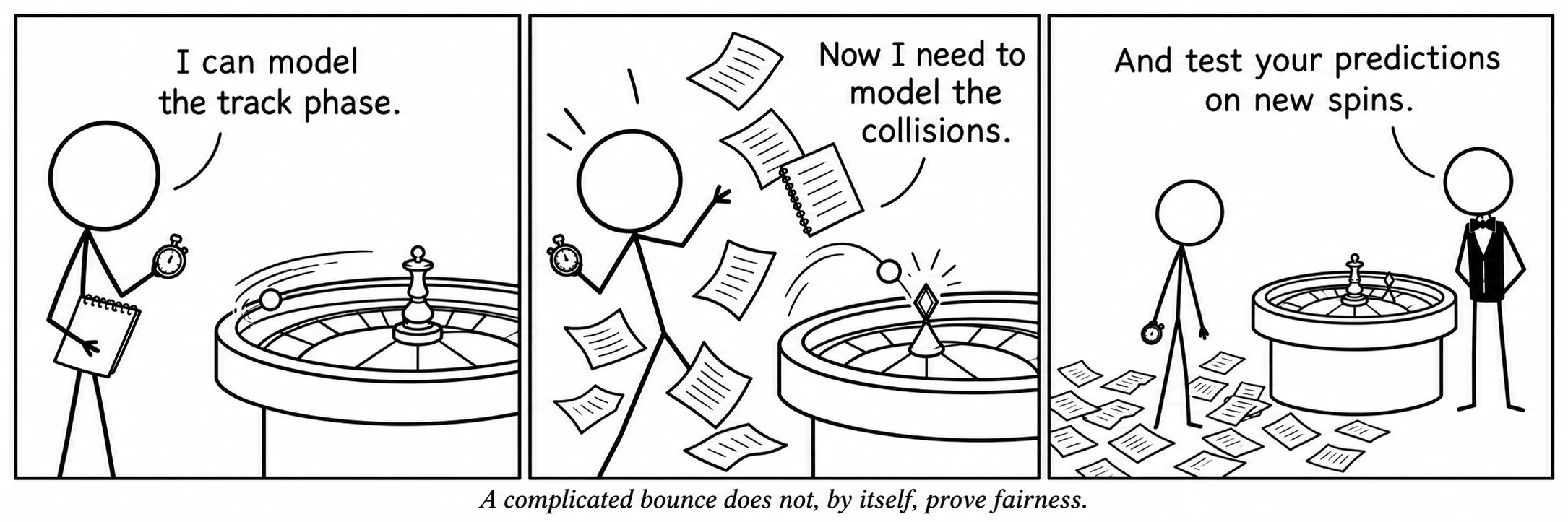
Ina anndee ado haa deflektoor adanngo. Caggal ɗuum, fiisik ina jogitoo kasino.
Iwdi
- Small, M. & Tse, C. K. “Predicting the outcome of roulette.”
- Bass, T. A. The Eudaemonic Pie.