Keewal Misal
Taarle jelu ngoni haanaa ndee ngam ndee maande waɗa maanaa.
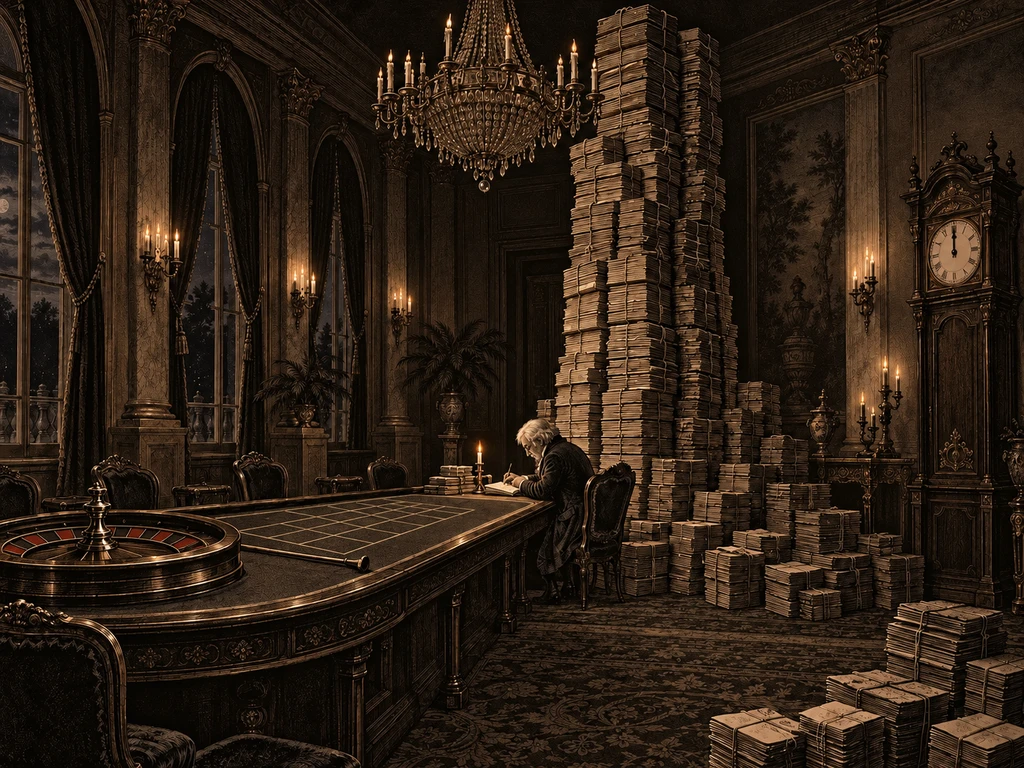
Ngam tawde e hoolaare yonnde suudu ndu limoore mum ina wara 1 nder 30, ɗo 1 nder 37 tijjaa, haanaa ko hedde taarle 4 400. Suudu 1 nder 35, nduu ndu yoɓetee e goonga, ina naamnoo hedde taarle 70 000.
Ko waɗi ɗe ɗuuɗi nii
For n independent spinsmatematikTaarle ceertuɗeKala taarol ina jogii porobabiliteeji gooti, no ko ɓenni wayiri fof. Ko ɗum woni ɓuuɓre kala hasbugol e lowre ndee.Tar fof →, the hit count has standard deviationmatematikSeerndu ndenndaanduRaasin karee wariyaas; ko woɗɗeende aadanteende njeñtudi e njaru fodaandu.Tar fof → √(np(1−p)); the estimated hit rate has standard error √(p(1−p)/n). Counts get noisier in absolute terms as n grows, while the uncertainty in the rate shrinks. Halving that rate uncertainty requires about four times as many spins.
Formil
For a one-sided test of a single pocketkuutorɗeSuuduGootel e cuuɗi 37 limoraaɗi e rotoor. Ina noddee kadi: wenndu, kopp.Tar fof → at the 5% level with 80% power, the required n is approximately ((1.645·√(p₀(1−p₀)) + 0.84·√(p₁(1−p₁))) / (p₁ − p₀))², with p₀ = 1/37 and p₁ the suspected rate. That holds for one pocket chosen in advance. Searching all 37 pockets requires a multiple-testing design; there is no universal sample-size multiplier. This tests departure from 1/37, not a profitable rate above 1/36.
Tarugol e kuuɗe
Sample size alone does not make an observation evidence or noise. Specify the effect, test and error rates before collecting data. A small sample can identify an extreme failure, while even a large sample may miss a very small departure. Replication and reliable recording remain necessary.
Coggu keɓe
At 50 spins an hour, recording 10,000 rounds takes 200 hours. Equipment changes during that time can complicate interpretation. That practical constraint does not establish that all bias detection is impossible or that every historical investigation took months.
Keewal misal ngam ɓural ngal e hoore mum
For a unitkaalisInitePari fuɗɗoode mo sistem walla fijoowo gollirta. Jokkondirɗe pari ina cifee e initeeji ngam ɗi kuutoroo e kala taabal.Tar fof → even-money single-zerotaarordeSeeroSuudu haako wootere nde hay pari njoɓdi fotndi, sappo e ɗiɗi walla kolon kuuɓataa; ko ɗum woni iwdi ɓural kasino. Ina noddee kadi: seero gooto, 0.Tar fof → bet, the mean is −1/37 and the standard deviation is √(1368)/37. After 1,368 independent bets, expected lossmatematikMajjere fodaandeNjaru fodaandu fiyaandu e kaalis pariyaaɗo fof; ko hakkundeere kaalis majjataako nder jonnde walla nder sahaa.Tar fof → is one standard deviation of the total. At 10,000 it is about 2.70 standard deviations. Neither threshold guarantees a losing result or validates a system.
Formil
Naamne
No. Grouping helps only when the alternative concentrates enough extra probabilitymatematikPorobabiliteSahaa njeñtudi, immorde 0 haa 1 walla 0% haa 100%. Limoore wootere: 1/37 = 2,70%.Tar fof → in that sectortaarordeGeɗal taarordeCeeɓnde cuuɗi takkondirɗi e taarorde, ceertunde e mooftere e tapi.Tar fof →. It can dilute a localized pocket effect.
Ee, so hoore taarorde ko wootere nden, nde moƴƴitinaaka. Ɗum ko anndude ɗum woni ko saɗi.
Ko aada. Ɗum firti ooñol goonga mawnde wiyaande ndee ina tawee laabi nay e nder joy.
Ƴeewndo weltinoowo
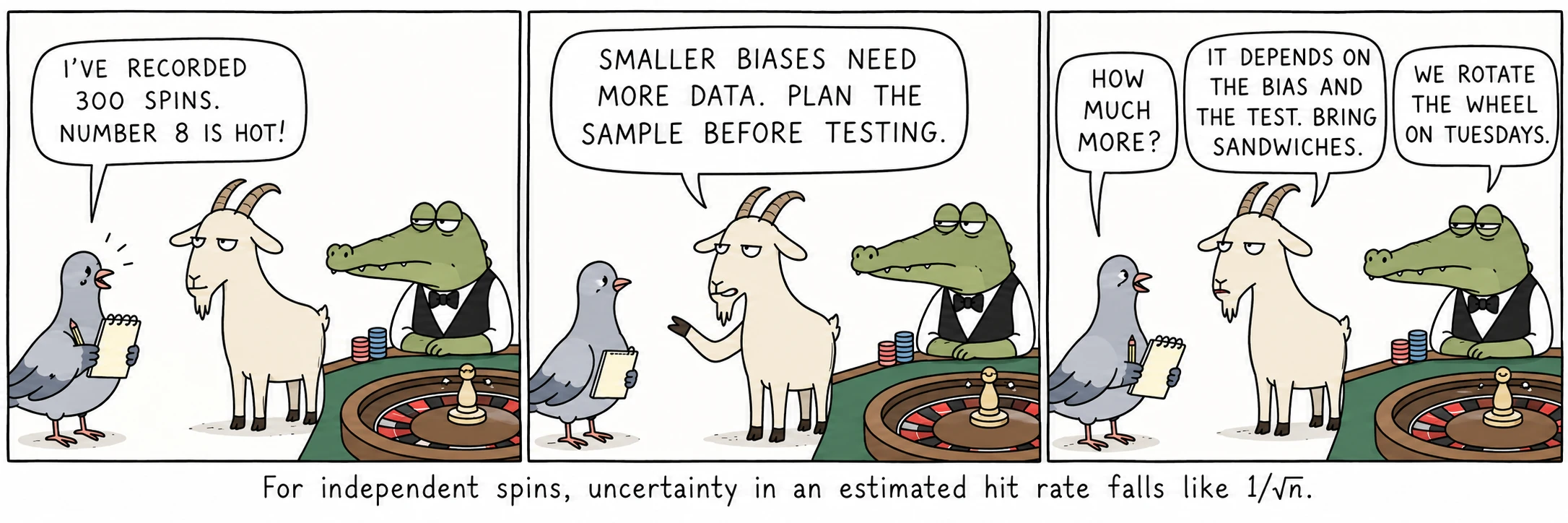
Bayle sahaa ina ustoo hono 1/√n. Muñal ina ɓuri yaawde ustaade.
Iwdi
- Feller, W. An Introduction to Probability Theory and Its Applications, Vol. 1.
- Barnhart, R. T. Beating the Wheel.
- Hiisa keewal misal