Juumre Fijoowo Kaalis
Hoolaade wonde njeñtudi ina “hewtii” sabu ummaaki ko ɓooyi.
Caggal boɗeeje sappo, porobabilite ɓaleere ina woni tawo 18/37. Taarorde ndee winndataa hay huunde, ndee yoɓetaake hay huunde.
Juumre ndee
If redpariBoɗeerePari njoɓdi fotndi e limooje 18 boɗeeje. E Farayse: rouge.Tar fof → has come up ten times, many players feel that blackpariƁaleerePari njoɓdi fotndi e limooje 18 ɓaleeje. E Farayse: noir.Tar fof → is “due” and bet accordingly. Others feel red is “hot” and bet that. Both are reasoning from a sequence that is already over to a spin that has not happened. In the fair single-zerotaarordeSeeroSuudu haako wootere nde hay pari njoɓdi fotndi, sappo e ɗiɗi walla kolon kuuɓataa; ko ɗum woni iwdi ɓural kasino. Ina noddee kadi: seero gooto, 0.Tar fof → model with independent spinsmatematikTaarle ceertuɗeKala taarol ina jogii porobabiliteeji gooti, no ko ɓenni wayiri fof. Ko ɗum woni ɓuuɓre kala hasbugol e lowre ndee.Tar fof →, the next-spin probabilitymatematikPorobabiliteSahaa njeñtudi, immorde 0 haa 1 walla 0% haa 100%. Limoore wootere: 1/37 = 2,70%.Tar fof → of black remains 18/37.
Ko waɗi ɗum ina wayi no goonga
Under the independent fair-wheel model, the proportions of red and black each tend toward 18/37 as the sample grows. This does not require a compensating run of black. After ten initial reds and N further spins, expected red and black counts differ by ten, while the contribution of those initial reds to the total proportion becomes smaller. Actual counts still fluctuate.
Monte-Carlo, 18 Ut 1913
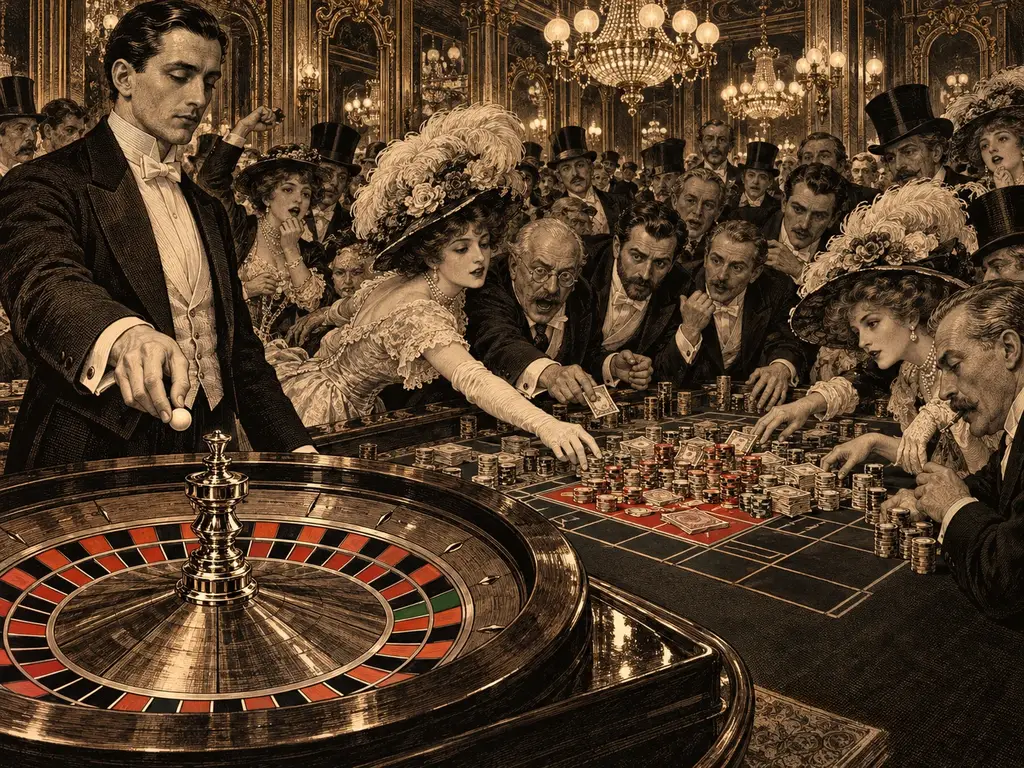
Ɓaleere ummiima laabi 26 jokkondirɗi e taabal e Casino de Monte-Carlo. Gila ɓaleere sappo e joyaɓere hedde, fijooɓe ina ndenndii e boɗeere, ina ɗiɗiɓna, ina ɗiɗiɓna kadi, kala taarol ina “ɓura goongaaji” e ngol ɓennungol. Kasino dañii miliyoŋaaji faraŋ. Jokkondiral ngal jogii ko porobabilite 1 e nder miliyoŋaaji 137 gila ɓaleere aranndeere, porobabilite wonde ɗum ina waɗoo sakket e nokku e kasinooji aduna kadi ko hedde gooto. Ɗum woni ko waɗi juumre fijoowo kaalis ina noddee kadi juumre Monte-Carlo.
Huunde aadanteende. Ina waɗa laawol gootol e nder 44.
Fijooɓe ina fuɗɗa tiiɗnaade. Boɗeere ina “hewtii”.
Taabal ngal ina heewi. Pariiji e boɗeere ina ɗiɗiɓnee caggal kala majjere.
Jawdi majjii. Kala ɓaleere hesere ina waɗa boɗeere ina keɓtinee ɓurde goongaaji.
Jokkondiral ngal ina gasa. Kasino dañii miliyoŋaaji faraŋ e yimɓe waɗooɓe pari e dow jokkondiral ngal waawaano “anndude” wonde ko jokkondiral.
Jungo wulngo
Tammbaade noone sabu ina e jokkondiral ko juumre wootere ndee huccitinaande: ina fodee jokkondiral ngal ina jokkoo, wonaa gasde. Ganndo miijo neɗɗo ina noddira ɗum jungo wulngomiijo juumɗoJungo wulngoHoolaare wonnde dañe jokkondirɗe, walla njeñtudi wootiri ina jokkondiri, ina ɓeyda porobabilite goɗndi. E taarorde ko juumre fijoowo kaalis huccitinaande.Tar fof →, caggal jaŋde 1985 Gilovich, Vallone e Tversky ɗi ndaarnoo jokkondire e fiɗgol bal e basket, ɗi njiyaani hay ɗe ɓuri sahaa. E 2018 Miller e Sanjurjo kolliri wonde ƴeewndo ngoo e hoore mum ooñiino: e winndannde gaɗaande, feccere dañe ɗe ngaddi caggal dañal ina woni les feccere fof fiɗoowo e hakkundeere, ɗuum waɗi fijoowo mo alaa jungo wulngo fof ina wayi no jaangi seeɗa. So feewnaama, keɓe ɗee ina kolla jungo wulngo seeɗa. Neɗɗo ina waawi wulde; taarorde alaa ngonka ngo woni e mum. Fijooɓe woɓɓe ina njogii hoolaare ɗiɗi ɗee e sahaa gootal: jokkondiral ina jokkoo haa “juuta no feewi” refti gasa. E taarorde peewnde kala mbaadi ina jogii njaru fodaandumatematikNjaru fodaanduNjeñtudi hakkundeere e kala pari e juuta. −1/37 pari ngam kala pari Orop laawol.Tar fof → wootu ndun e suɓaade noone e jaaɓugol pees kaalis: −2,70% pari.
E taabal goonga
Croson and Sundali (2005) watched 18 hours of security video from one double-zero table at a large casino in Reno: 139 players placing 24,131 bets. On the even-money betspariPari njoɓdi fotndiBoɗeere/ɓaleere, peccotaake/peccotoonde, mawɗe/tokooseeje. Limooje 18, ina yoɓa 1:1.Tar fof →, players were about evenly divided between following short runs and opposing them. After five of a kind in a row they leaned against the run, and after six or more, 85% of their bets were on the other side. The same players showed the hot hand about themselves: after a win on the numbers they covered 13.6 numbers on the next spin on average, against 9.2 after a loss. The study found no statistically significant evidence of wheel bias. These are observations from one table, and the authors discuss alternative explanations for changes in betting after wins.
Caggal kasino
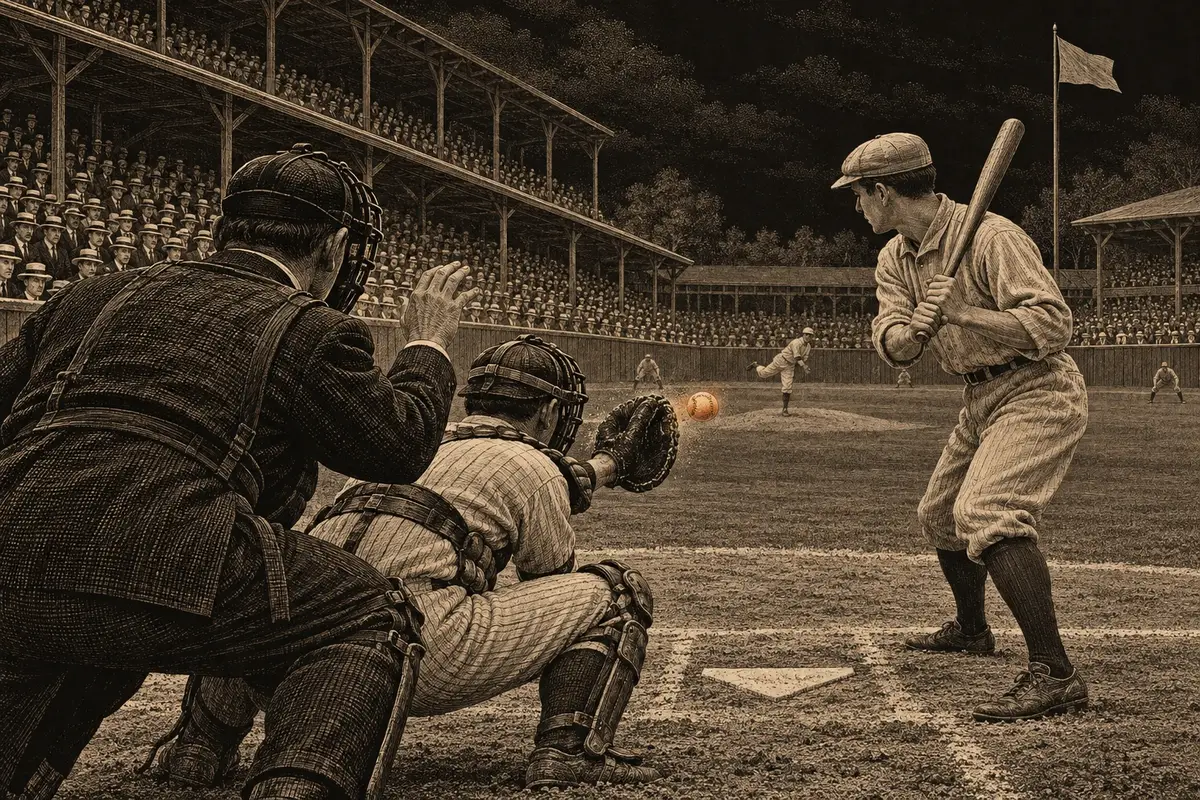
Foodagol gootol ngol ina yiyee ɗo kuuɓtodi goonga ina mbaɗee. Clotfelter e Cook (1993) njokkii fijo limooje ñalnde kala Maryland: kaalis pariyaaɗo e limoore ina ustoo no feewi nde ndee yaltii, ina ɓooya lebbi ado rutteede, tawa yaltinngol ngol alaa jejjitaare. Chen, Moskowitz e Shue (2016) tawii ɗum e nder gannduɓe golle. Ñaawooɓe dañgol hisnaare Dowlaaji Dentuɗi Amerik ina ɓura haa poyaaji 3,3 salaade dosiye so ɓe jaɓii ngo ado mum. Ñaawooɓe baseball ina ustoo poyaaji 1,5 e wiyde strike caggal wiyde gooto, e ko ɓuri laabi ɗiɗi ɗum e fiɗɗe ɓadiiɗe. E ƴeewndo e nder golle e kurtiiɓe ñamaleeje yoɓeteeɓe njoɓdi fotndi, haa 9% kuuɓtodi ina mbaylitaa e ndee laawol. Dosiyeeji ɗii ina ngarnoo e doggol sahaa, ɗuum waɗi kuuɓtodi sakkitiindi wiyaani hay huunde e ndi garooti, no taarol sakkitiingol wiyataa hay huunde e ngol garoowol.
Juumre fijoowo kaalis huccitinaande
Ganndo filosofi Ian Hacking (1987) inndii mbaadi tataɓol. Neɗɗo ina naata e suudu, ina yi’a deeji ɗiɗi ina njana jeegom e jeegom, ina sikka wonde ɗi njaltinaama laabi keewɗi ado. Kala jaltinngol ina foti sahaa wonde jeegom e jeegom, ngol aranngol e jemma oo walla ngol ujunereewol, ɗuum waɗi ko o yi’i wiyaa hay huunde e no fijo ngoo ɓooyiri. E ruleet ko fijoowo hewtoyɗo e tabalo hollirɗo boɗeeje jeetati, sikki wonde taabal ngal ina taarnoo waktuuji ngam addude ɗe. Juumre aadanteende ndee ina janngira ko ɓenni e taarol garoowol; ndee ina janngira huunde nde heewaa e ko ɓenni ko hay gooto yi’aani.
Ganndo miijo neɗɗo hoolaaɗo ɗum
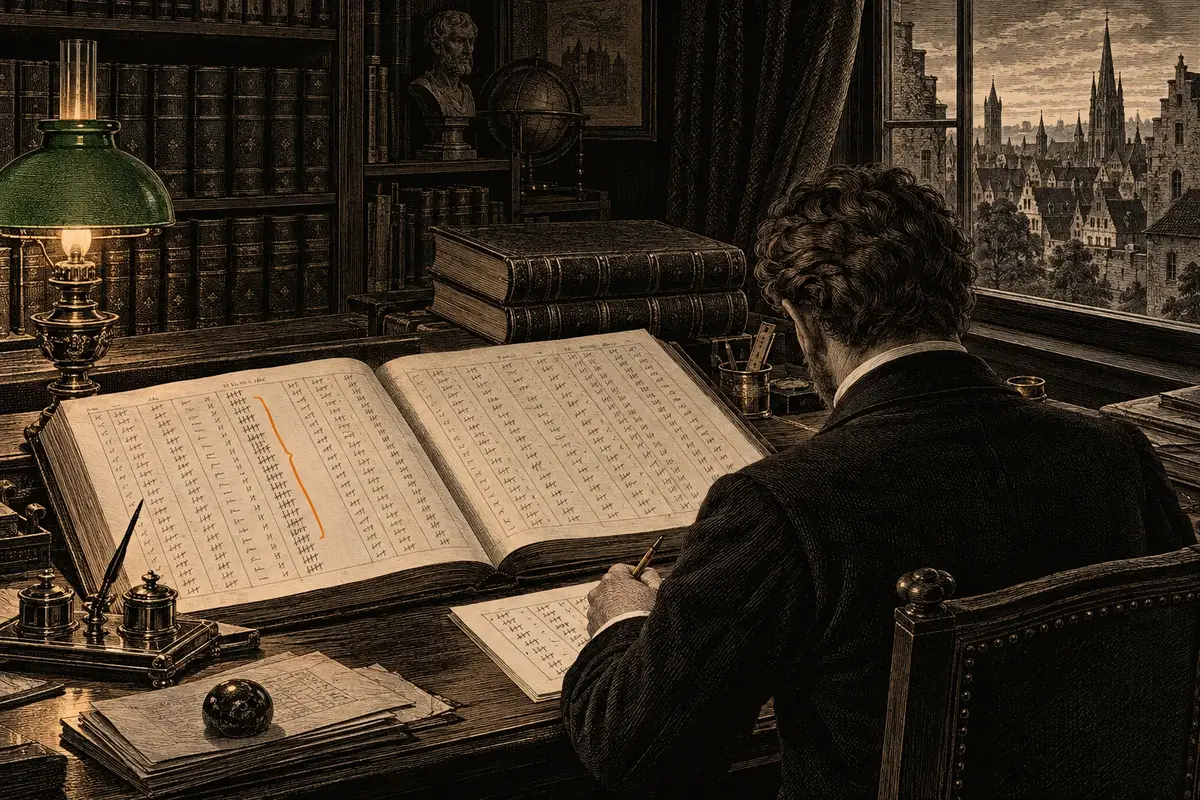
Juumre ndee jogiima faabooɓe gannduɓe. Ganndo miijo neɗɗo Almaañ Karl Marbe ƴeewtii kaaye winndannde nay, kala e majje ko jibinannde 49 152, tawi jokkondiral ɓurngal juutde sukaaɓe worɓe walla rewɓe jokkondirɓe ko 17, sikki wonde jokkondire juutɗe ina ɓura famɗude e ko sahaa newnani, ɗuum waɗi jokkondiral ina waɗa njeñtudi goɗndi ina ɓura sahaa. Sahaa tan ina wiya ko woɗɗi ɗum: e jibinannde 196 608, jokkondiral 17 walla ko ɓuri ina ummoo hedde laabi nay e nder joy. Marbe tawii ko jokkondiral sahaa wayi ko feewi. Epstein (2013) ina hokka ndee daarol; Porobabilite Jokkondire e Ruleet ina hokka mbaadi ruleet.
Ɗo juumre ndee huutortaake
If the wheel were physically biased, past spins would be informative, because they would be evidence about the pocketskuutorɗeSuuduGootel e cuuɗi 37 limoraaɗi e rotoor. Ina noddee kadi: wenndu, kopp.Tar fof → rather than about luck. That is the Lab’s subject. The sample required depends on the size of the bias, the test and the acceptable error rates. A short streak alone does not distinguish bias from chance; comparing explanations also requires assumptions about how plausible each was before the data.
Naamne
Alaa. Ina huutoree e kala huunde ceertunde fuɗɗitotoonde: deeji, pees kaalis, limooje lotori.
With more independent spins, the proportions tend toward their probabilities; they do not have to be close after any fixed number. Standard single-zero bets have an expected lossmatematikMajjere fodaandeNjaru fodaandu fiyaandu e kaalis pariyaaɗo fof; ko hakkundeere kaalis majjataako nder jonnde walla nder sahaa.Tar fof → of 2.70% of turnoverkaalisKaalis pariyaaɗo fofKawrital kaalis pariyaaɗo nder jonnde walla sahaa, limtaa kadi kaalis dañaaɗo pariyaaɗo kadi. Ina noddee kadi: handle, action.Tar fof →, but your actual result can be far from that average.
Alaa sariya hakkundeere. Ko sariya limooje mawɗematematikSariya limooje mawɗeHakkundeere njeñtuɗi ceertuɗi ina ɓadoo njaru fodaandu tuma nde limoore etaaɗe ɓeydotoo.Tar fof → woodi, ngal ina gollira lattinde ndiyam.
Weltaare e Matematik
Etu ɗum hoore maa adii. Kala jaabawol ina suuɗii; uddit ɗum so a heblii.
Caggal werlagol laabi 10, piyees ina holla fas 7 e pil 3. Caggal werlagol laabi 1 000 ina holla fas 517 e pil 483. Hol pil yettii fas?
Hollu jaabawol ngol
Jaabawol Alaa. Ceerndugol ngol ɓeydii iwde 4 haa 34. Fecceere ndee tan ɓadii potde.
The ratio of heads to tails fell from 7/3, about 2.33, to 517/483, about 1.07. This example illustrates how a proportion can move closer to one-half while the count difference grows.
The gap between them grew, from 4 to 34. With a fair coin a gap of around 30 after 1,000 tosses is ordinary: the typical gap grows roughly with the square root of the number of tosses, while the ratio settles toward 1.
Nothing pulled the tails back. The early surplus of heads was diluted by the next 990 tosses, not corrected.
Werlo piyees laabi nay, ndaar tan werlagol jokkiiɗi fas. Feccere honnde e majji ko fas? Hiisa ɗum e kala e jokkondire 16 waawooje ɗee, ƴettu hakkundeere fecceeje ɗee. Hol ko 50%?
Hollu jaabawol ngol
Jaabawol Alaa. Ko 17/42, hedde 40,5%. E ndee ndaarngal, piyees potɗo ina sikkee ina jaangoo caggal fas.
Limto jokkondire 16 ɗee (F = fas, P = pil). Ɗiɗi e majji, PPPP e PPPF, alaa fas e werlagol tati adanɗi, ndeen hay huunde jokkaani fas; 14 ina keddoo.
E kala e majji, ƴettu werlagol jokkiiɗi fas, yiytu feccere ko fas. FFFF ina rokka 3 e 3. FFFP ina rokka 2 e 3. FPFP ina rokka 0 e 2. E yahde e 14 ɗee fof: jokkondire jeegom ina rokka 0, nay ina rokka 1/2, gootal ina rokka 2/3, tati ina rokka 1 (FFFF, PFFF e PPFF).
Hawtu fecceeje ɗee: 4 × 1/2 + 2/3 + 3 = 17/3. Feccu e 14: 17/42 ≈ 40,5%.
Alaa werlagol ɓurɗo yiɗde pil; kala ko 50–50. Ooñol ngol ina iwa e ƴettude hakkundeere jokkondiral e jokkondiral: jokkondiral heewngal fas ina jogii werlagol keewɗi ndaareteeɗi kono ina limee laawol gootol, hono jokkondiral jogiingal fas gootol tan. Miller e Sanjurjo (2018) kolliino wonde ƴeewndo jungo wulngo hitaande 1985 betiino fijooɓe basket mum e ndee laawol, ndeen fijooɓe sikkaaɓe ɓurtaa sahaa e jokkondire dañe ina ɓurnoo ɗum seeɗa e goonga.
Ƴeewndo weltinoowo
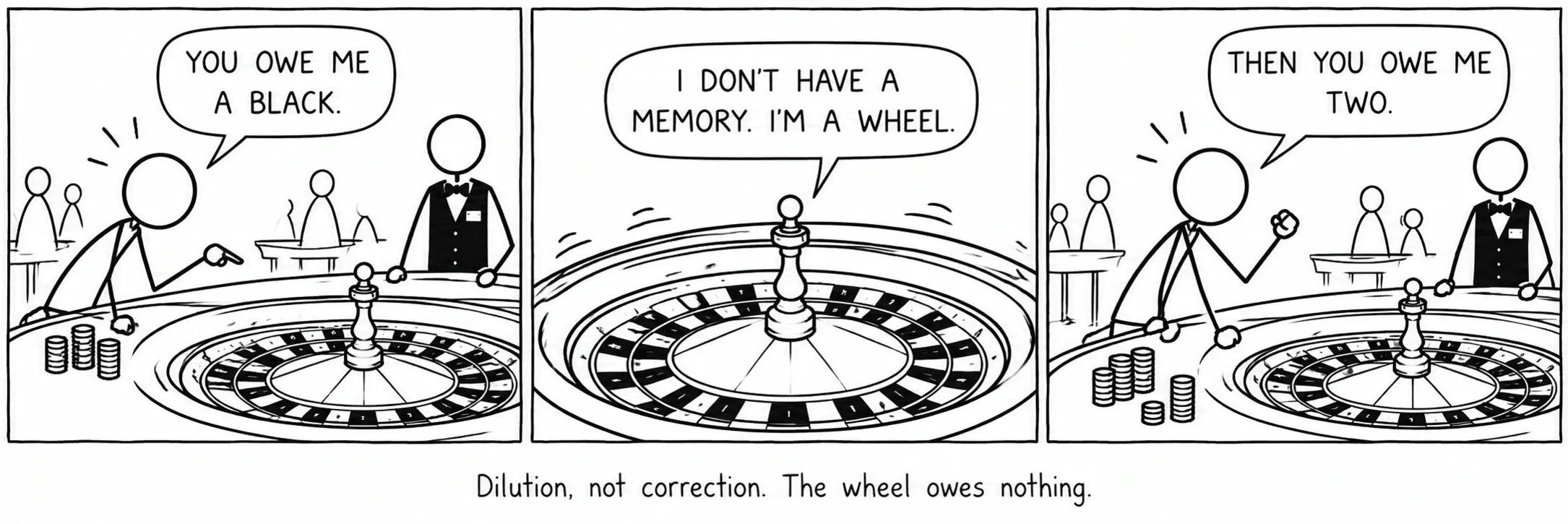
Lattinde, wonaa feewnude. Taarorde ndee yoɓetaake hay huunde.
Iwdi
- Feller, W. An Introduction to Probability Theory and Its Applications, Vol. 1.
- Schwartz, D. G. Roll the Bones: The History of Gambling.
- Ethier, S. N. The Doctrine of Chances: Probabilistic Aspects of Gambling.
- Epstein, R. A. The Theory of Gambling and Statistical Logic, 2nd ed.
- Croson, R. & Sundali, J. “The gambler’s fallacy and the hot hand: empirical data from casinos.”
- Chen, D. L., Moskowitz, T. J. & Shue, K. “Decision making under the gambler’s fallacy: evidence from asylum judges, loan officers, and baseball umpires.”
- Clotfelter, C. T. & Cook, P. J. “The ‘gambler’s fallacy’ in lottery play.”
- Gilovich, T., Vallone, R. & Tversky, A. “The hot hand in basketball: on the misperception of random sequences.”
- Miller, J. B. & Sanjurjo, A. “Surprised by the hot hand fallacy? A truth in the law of small numbers.”
- Hacking, I. “The inverse gambler’s fallacy: the argument from design. The anthropic principle applied to Wheeler universes.”