Roulettenburg Dostoevsky
The Gambler (1866): deftere ɓurnde moƴƴude e dow ruleet, nde gorko majjinoowo e mum winndi, e nder balɗe noogaas e jeegom.
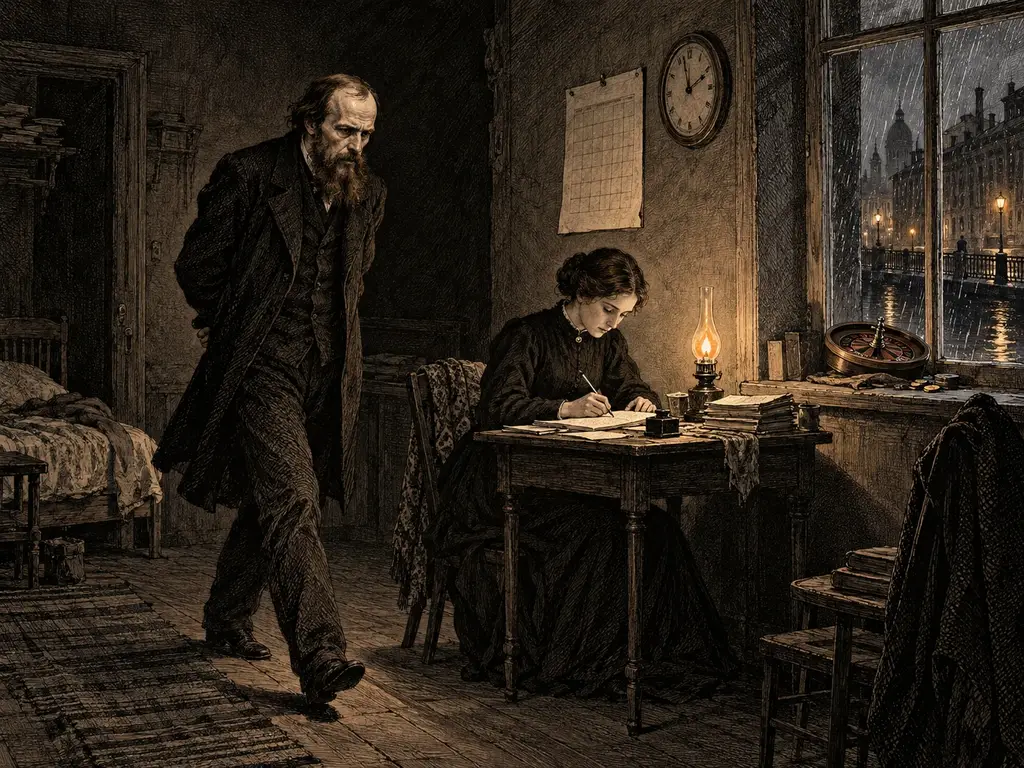
Dostoevsky wiyani winndoowo The Gambler ngam yoɓde ñamaleeji ɗi o ñamlii e taabalji Wiesbaden e Homburg. Taalloowo mayre Alexei ina sifa kasino ndiyam cellal, sistemji ɗin, hoolaare wonde jokkondiral ina foti haaɗde, e no dañal yiyetee hono faamde, e peewal mo hay gannduɗo hiisa ɓurtinaani.
Ko waɗnoo
E hitaande 1866, Dostoevsky ina foti hokkude yaltinoowo defte romaan ado 1 Nowaambar, so wonaa ɗum o majjina hakkeeji golle makko duuɓi jeenay. O majjinnoo no feewi e ruleet e nokkuuji ndiyam cellal Almaañ e 1863 e 1865, o watti jawdi mum e kaŋŋe debbo makko e tigge. O nawli winndoowo jaawɗo, Anna Snitkina, o wiyani mo The Gambler hakkunde 4 e 29 Oktoobar, o gasni ɗum tuma nde balɗe heddii. O resi Anna hitaande garnde ndee. O jokki fijo kaalis haa 1871, refti o accii ɗum fof.
Roulettenburg
The resort supplies a shared social setting for relatives, visitors and gamblers. Spellings of its name vary by translation. Fiction can vividly portray a gambling table without certifying every historical rule or every belief expressed by a character.
Maama debbo
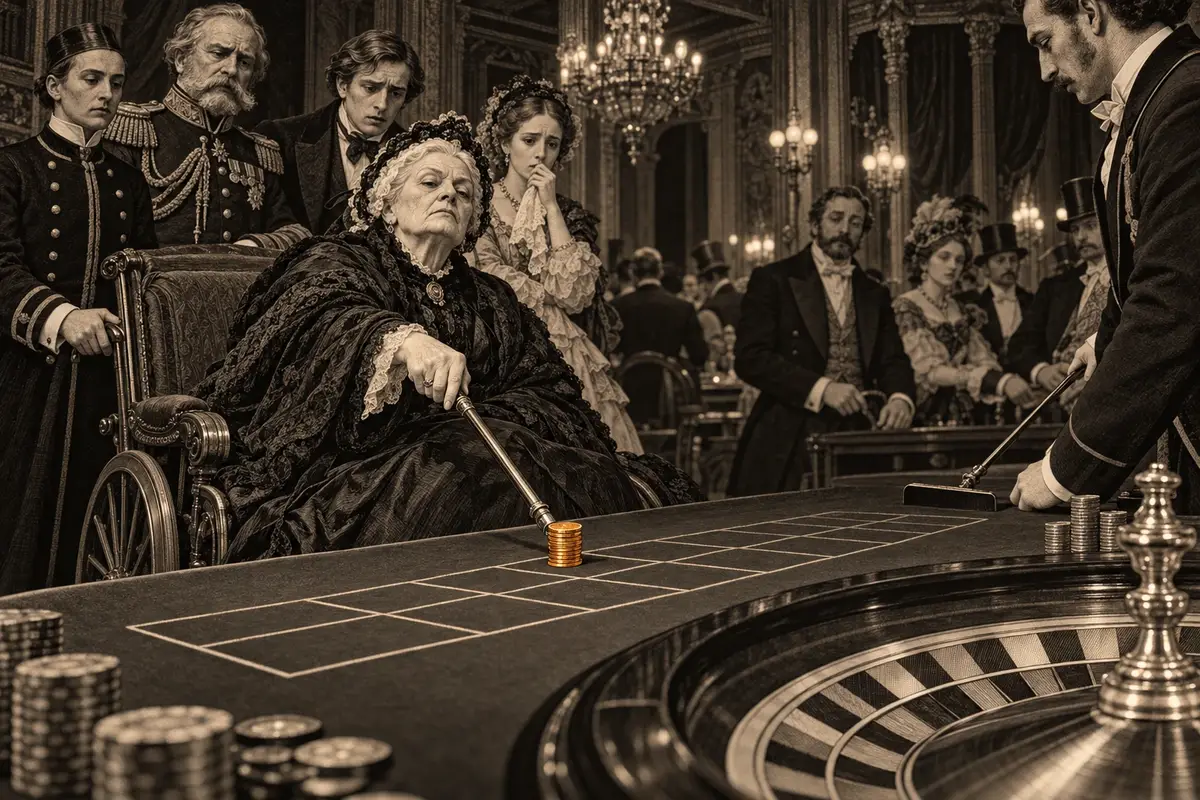
In chapters IX and XII, the grandmother’s enthusiasm for zerotaarordeSeeroSuudu haako wootere nde hay pari njoɓdi fotndi, sappo e ɗiɗi walla kolon kuuɓataa; ko ɗum woni iwdi ɓural kasino. Ina noddee kadi: seero gooto, 0.Tar fof → leads to repeated bets and frustration. She also switches to redpariBoɗeerePari njoɓdi fotndi e limooje 18 boɗeeje. E Farayse: rouge.Tar fof →: her losses are not simply one uninterrupted series of straight-up wagers on zero. Alexei’s own warnings sometimes treat recent outcomes as reasons to expect a different result next.
Dañal Alexei
Alexei reports winnings of two hundred thousand francs, then spends the money in Paris with Blanche. The contrast invites a literary reading about what winning does to him; it does not establish a medical diagnosis or prove that a successful session reveals skill.
Ko waɗi ndi ko deftere ɓurnde moƴƴude e ruleet
For comparison, consider a modern independent, uniform, single-zero model. Zero has probabilitymatematikPorobabiliteSahaa njeñtudi, immorde 0 haa 1 walla 0% haa 100%. Limoore wootere: 1/37 = 2,70%.Tar fof → 1/37 on each spin, whether it has just appeared or has been absent for many rounds. A standard 35:1 straight-up payoutkaalisNjoɓdiKo pari dañndi ruttata, wiyaa “X e 1” ɓeydaa e pari ruttaaɗo.Tar fof → has expected net return −1/37 per unitkaalisInitePari fuɗɗoode mo sistem walla fijoowo gollirta. Jokkondirɗe pari ina cifee e initeeji ngam ɗi kuutoroo e kala taabal.Tar fof →. Those are assumptions and calculations for the model, not a claim that every detail of the novel exactly matches a current table.
Naamne
O hoolnoo e deeƴre: wonde fijoowo deeƴɗo waawaa majjude. Ɗum ko miijo juumɗo ardaade, tee o sifii ɗum ɓuri kala neɗɗo tuma nde o jogii ɗum.
Ko nokkuuji hawrunɗi. Wiesbaden ko yeru mum mawɗo.
Ina rabbiɗi: kiikiiɗe juutnde. Jaŋng nde hade jonnde maa garoore, wonaa caggal.
Ƴeewndo weltinoowo
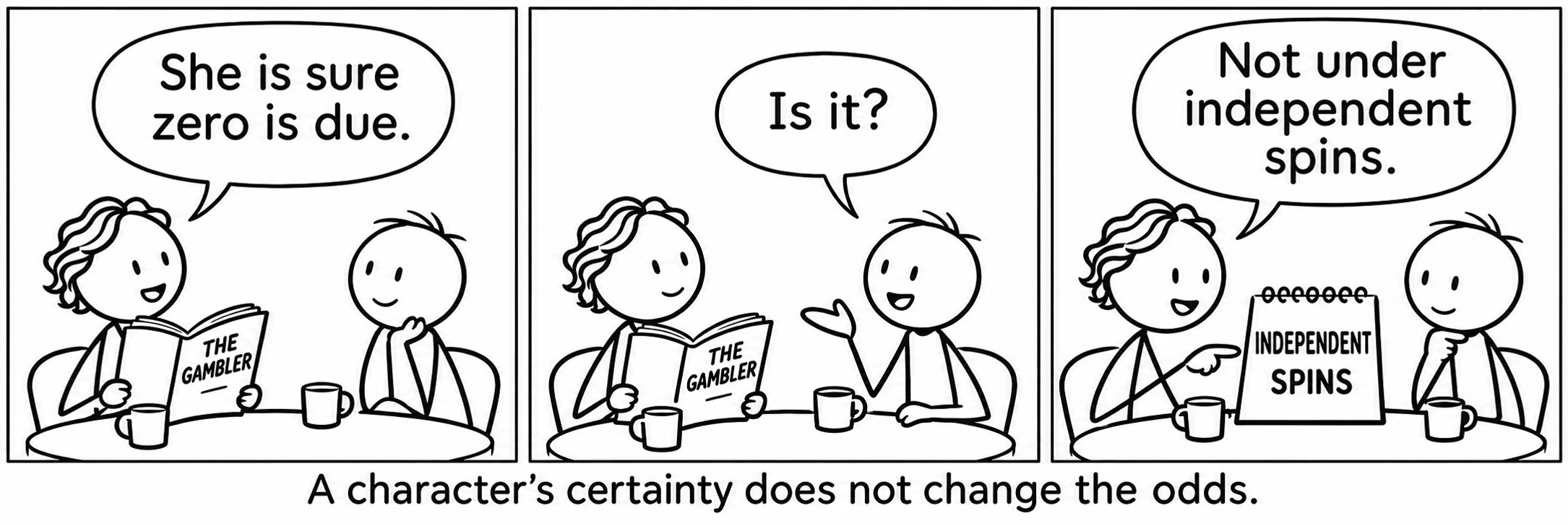
O sifii juumre ndee no timmiri tuma nde o hoolkii nde. Ɗum ko deftere ndee.
Iwdi
- Dostoevsky, F. The Gambler.