Keerol Majjere / Keerol Dañal
Doosgol darnude ko geɗal gootal tan e “sistem” ngal jogii batte goonga, sabu ina waylita ko foti pariyaa-ɗaa.
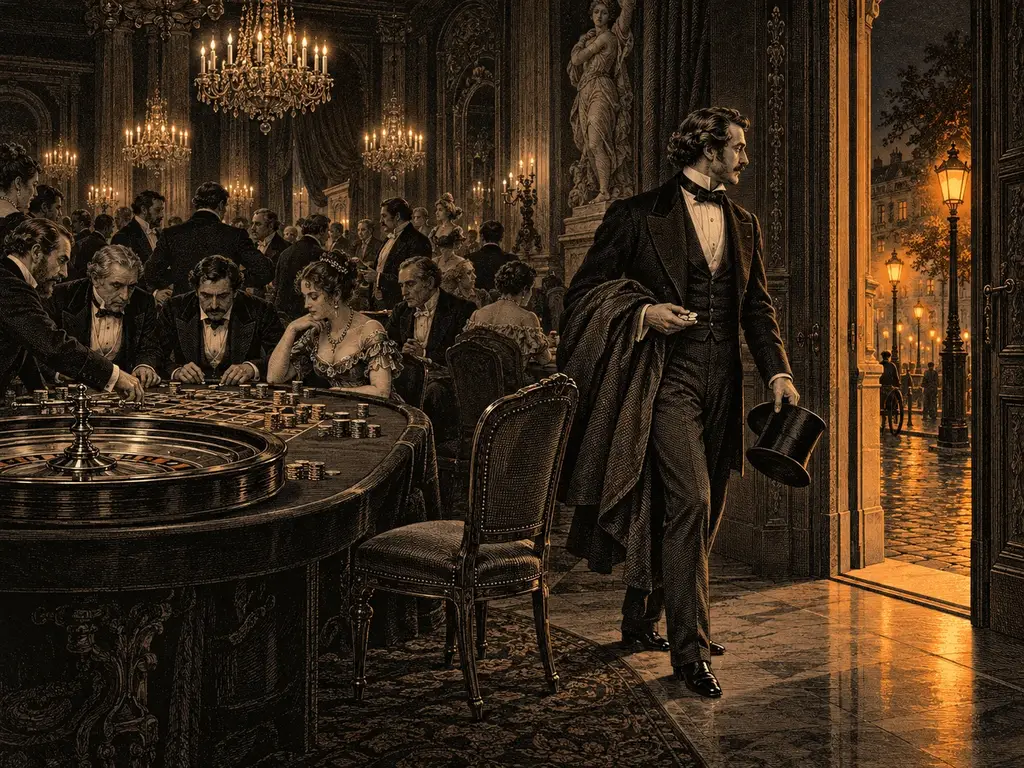
Darnude law ina ustina kawtal kaalis pariyaaɗo, ndaw majjere fodaande ndee. Waɗataa ɓural; keerol dañal wonaa “uddude” huunde nde taarol garowol waawaano rokkude walla ƴettude.
Keerol majjere
Set a loss limit before starting and do not place a stake that could take the session below it. Simply checking the balance after a large bet may allow the limit to be exceeded. A limit protects the budget only if it is followed; it does not change the probabilitymatematikPorobabiliteSahaa njeñtudi, immorde 0 haa 1 walla 0% haa 100%. Limoore wootere: 1/37 = 2,70%.Tar fof → of the next result.
Keerol dañal
A profit target ends a session when a chosen gain is reached. It can change the chance of finishing ahead and the sizes of wins and losses, but does not guarantee a profit. The table compares specific rules under identical stakes and a 100-spin cap. Different settings produce different results.
Haɓaare ɓooyɗe
The question is whether choosing when to stop can turn unfavorable bets into a favorable game. For a bounded number of independent standard single-zerotaarordeSeeroSuudu haako wootere nde hay pari njoɓdi fotndi, sappo e ɗiɗi walla kolon kuuɓataa; ko ɗum woni iwdi ɓural kasino. Ina noddee kadi: seero gooto, 0.Tar fof → bets with bounded stakes, expected lossmatematikMajjere fodaandeNjaru fodaandu fiyaandu e kaalis pariyaaɗo fof; ko hakkundeere kaalis majjataako nder jonnde walla nder sahaa.Tar fof → equals expected turnoverkaalisKaalis pariyaaɗo fofKawrital kaalis pariyaaɗo nder jonnde walla sahaa, limtaa kadi kaalis dañaaɗo pariyaaɗo kadi. Ina noddee kadi: handle, action.Tar fof → divided by 37, even when the stopping rule uses past results. Unlimited-credit arguments require care: a rule with unbounded expected turnover is outside this simple statement.

Ko waɗi hakkundeere ndee ina moƴƴa
For a fixed $10 stake, each additional funded standard single-zero spin has expected loss $10/37. A stopping rule changes the expected number of spins, so multiply that expected count by $10/37. In the table, using both boundaries reduces expected spins to about 69.46 and expected loss to about $18.77.
Suɓaade limooje ɗee
Choose limits from money and time you can afford to spend, rather than a promise that a target is likely to be reached. No percentage of a budget makes gambling safe or guarantees a particular session length. The chart below has no $100 stop rule applied; it shows why an actual limit must be implemented, not just drawn on a chart.
- p10 −$460
- p25 −$300
- medyan −$140
- p75 +$0
- p90 +$140
Doosgol dow doosɗe
Doosgol darnude ina golla tan si taƴaama hade jonnde tawa wayliteeke hakkunde mum. “Taarol gootol tan ngam fotde” ko keerol majjere ngol neɗɗo mo ngol sosaa ngam reenude ina haɓɓitira. Si a yiyii ɗum ina waɗa, ustu pari oo e nokku toownude keerol ngol.
Naamne
Alaa. Ina ɓeyda keewal dañe pamaro ina acca hakkundeere juuta ndee e −2,70% ko pariyaa-ɗaa.
Ina ustina kaalis pariyaaɗo fof e laawol gootol ina ɓuri newde jogaade. Huutoro ɗi ɗiɗi fof.
Yaltu. Ko ɗum woni doosgol ngol. Taarle ɗe fijaaka-ɗaa coggotaake hay huunde.
Ƴeewndo weltinoowo
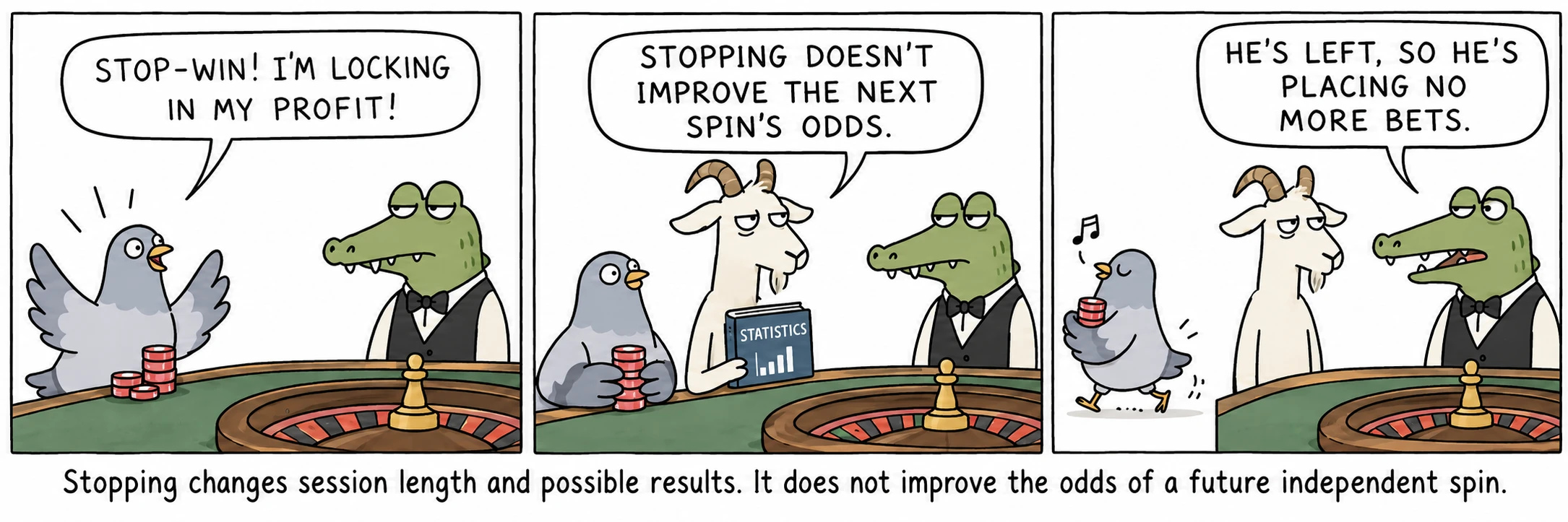
Darnude ina ustina kaalis pariyaaɗo fof. Ko ɗum tan waɗata, ɗum kadi ina yonii.
Iwdi
- RouletteDoc. Ƴeewndo kuuɓal dabareeji ruleet.
- Roulette77. Ƴeewndo kuuɓal dabareeji ruleet.
- Ethier, S. N. The Doctrine of Chances: Probabilistic Aspects of Gambling.
- Epstein, R. A. The Theory of Gambling and Statistical Logic, 2nd ed.