Miijo Juumɗo: Limooje “Haanii Yaltude”
“Sappo e jeeɗiɗi yaltaani e taarle 150. Haanii yaltude.” Haanaani.
On independent uniform single-zerotaarordeSeeroSuudu haako wootere nde hay pari njoɓdi fotndi, sappo e ɗiɗi walla kolon kuuɓataa; ko ɗum woni iwdi ɓural kasino. Ina noddee kadi: seero gooto, 0.Tar fof → spins, a number’s chance on the next spin remains 1/37, however long it has been absent. Calling it “due” mistakes a long-run proportion for a promise about the next result.
Ko wiyetee
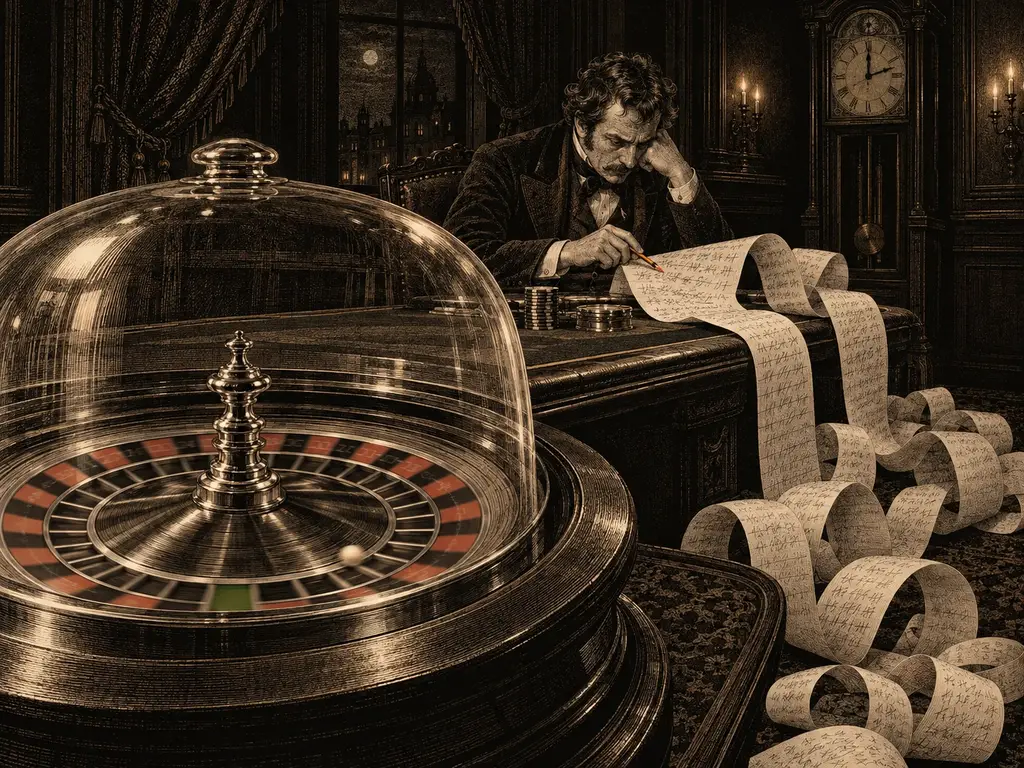
Kasinooji ina kolla njeñtuɗi 20 haa 500 sakkitiiɗi tee ko heewi ina maandina limooje “jaangooje” ɗe yaltaani sahaa. Fijooɓe ina njanngoo tabalo ngo, ina njiya 17 yaltaani taarle 150, ina mbaɗa pari e mum sabu ina sikka nde haanii yaltude. Miijo ngoo ko e juuta kala limoore ina yaltoo 1/37 e sahaaji, ndeen limoore nde ɓooyi ina foti tawtaade.
Ko waɗi ɗum ko juumre
In the independent uniform model, the next spin has the same probabilities whatever the recorded history. The law of large numbersmatematikSariya limooje mawɗeHakkundeere njeñtuɗi ceertuɗi ina ɓadoo njaru fodaandu tuma nde limoore etaaɗe ɓeydotoo.Tar fof → concerns proportions over growing samples; it does not require a missing number to appear more often later. A fixed past gap can become small relative to the total without being repaid.
Ko waɗi ina wa'i no ko goonga
Sabu e kala goɗɗum e nguurndam, ŋakkeende ina hollita garol: kaar mo arani hojomaaji noogaas ina ɓuri arde e joy garooje. Ɗum ko sabu kaaruuji ina njogii sahaaji tabitiiɗi. Ruleet alaa sahaa tabitiiɗo; ina jogii porobabilitematematikPorobabiliteSahaa njeñtudi, immorde 0 haa 1 walla 0% haa 100%. Limoore wootere: 1/37 = 2,70%.Tar fof →, tee porobabilite wonaa geɗal fodaangal. Miijo ngoo ina moƴƴi e ko ɓuri heewde e aduna, tee ko juumre e taarorde.
Ƴeewndo ngo
Use a simulation to compare a number selected after a long absence with a number selected in advance. Under independent uniform spins, both have the same next-spin probability. Finite samples will differ, sometimes substantially.
Real-world data can also be used to investigate bias or dependence, but that requires a defined test, enough data for the effect being studied and independent validation. A “hot” or “cold” label alone establishes neither.
Miijo juumɗo huccitinaaɗo
“It is hot, so it will keep winning” also lacks support under the independent uniform model. For any selected number, the probability of at least one hit in the next 37 spins is 1 − (36/37)^37, about 63.71%. That is a theoretical probability, not the guaranteed result of a short demo session.
Naamne
Ina hollita ɗe sabu fijooɓe ina ƴama. Tabalo ngo ko goonga tee alaa nafoore.
(36/37)⁵⁰⁰ ≈ 0,0001%: ina ŋakki, tee ko 1/37 haa jooni e taarol garoyngol. So ɗum ina waɗa sahaa kala e taarorde wootere, ɗum ko naamnal ooñol, tee jaabawol ngol ko woɗɗitaade e ndee limoore.
Alaa.
Ƴeewndo weltinoowo
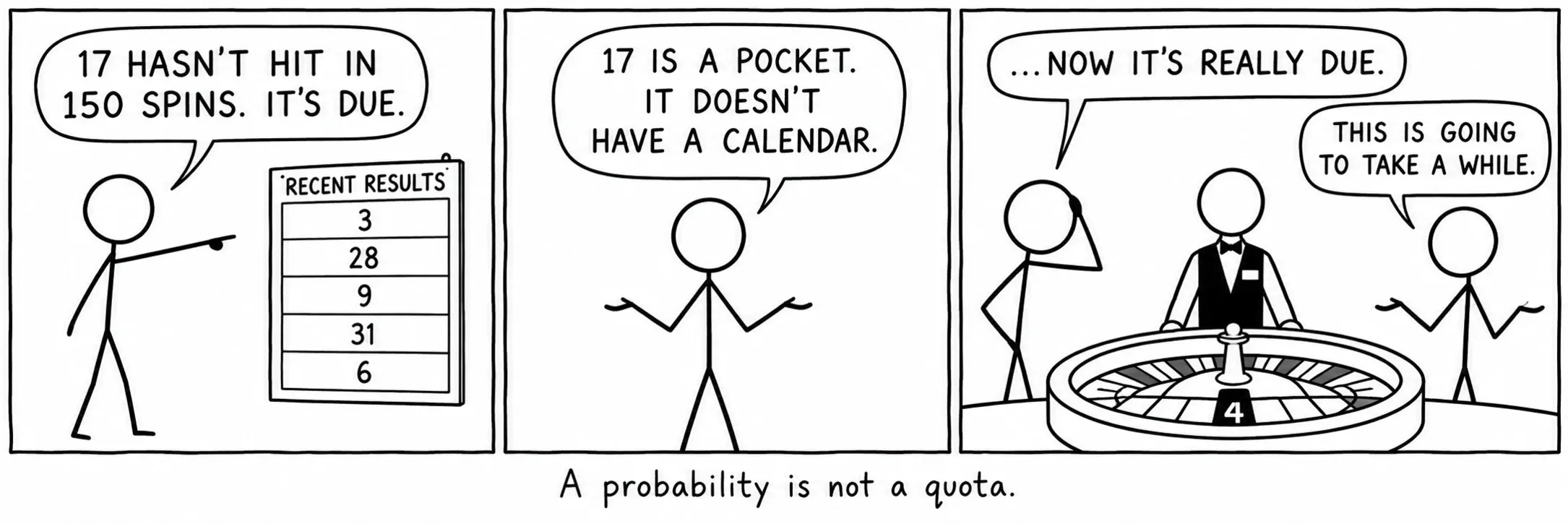
Porobabilite wonaa geɗal fodaangal.
Iwdi
- Feller, W. An Introduction to Probability Theory and Its Applications, Vol. 1.
- Ethier, S. N. The Doctrine of Chances: Probabilistic Aspects of Gambling.